
As Idaho WWAMI continues to grow and adapt to the needs of today’s students and the patients they will serve, alumni perspectives offer a grounding reminder of how far medical education has come.
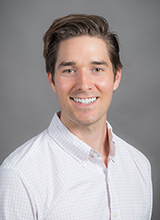
Two graduates, separated by a decade but united by shared roots in Idaho WWAMI, recently reflected on what has changed since their first days in medical school, and what has stayed with them.
For Nicholas Tacke, M.D., (E2015), those early months in Moscow were defined as much by camaraderie as by coursework. He recalls a blur of “game nights, group dinners, IM sports” mixed in with anatomy, lectures, and exams. But above all, he highlights the friendships that formed the backbone of the experience.
“Building those strong friendships was so important to making the medical school experience enjoyable and meaningful,” he says. “Having close peers to lean on when the stressful aspects of training arrived helped build a resilience that has extended through residency, fellowship and beyond.”
Now a psychiatrist, Dr. Tacke has witnessed firsthand how the field has transformed over the past decade. He said improved access to mental health care, greater integration of psychiatry into primary and specialty settings, and a growing openness among patients to seek help.
“Since COVID, there was a rapid shift toward telehealth,” Dr. Tacke said, “ making it possible for me to even work from home sometimes, which I did not expect when entering medicine.”
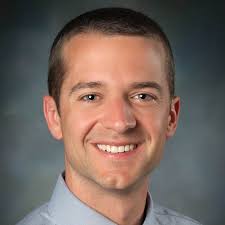
Primary internist Roger Turcotte, M.D., (E2005). looks back even farther, to a time when “everything was on paper,” textbooks were underlined by hand, and late-night study sessions in cubicles were the norm. His memories of Moscow are vivid and textured: the “hilly Palouse,” the old Moscow Hotel Apartments, and countless meals from San Miguel’s taco truck. First-year anatomy, he recalls, was a revelation.”
“Seeing inside the human abdomen and thinking ‘so that’s what it looks like in there!’” he said.
For Dr. Turcotte, that foundational year remains unforgettable.
“First year was completely transformational, incorporating physiology into not just your brain but your psyche, changing forever the way you see the human body, and the world.”
With two decades of practice behind him, he sometimes imagines the insight he could bring to repeating it all. As he puts it, “It’s a shame you only go to medical school once.”
Together, their memories show how the Idaho WWAMI experience leaves a lasting imprint on both the practice and the people of medicine.