
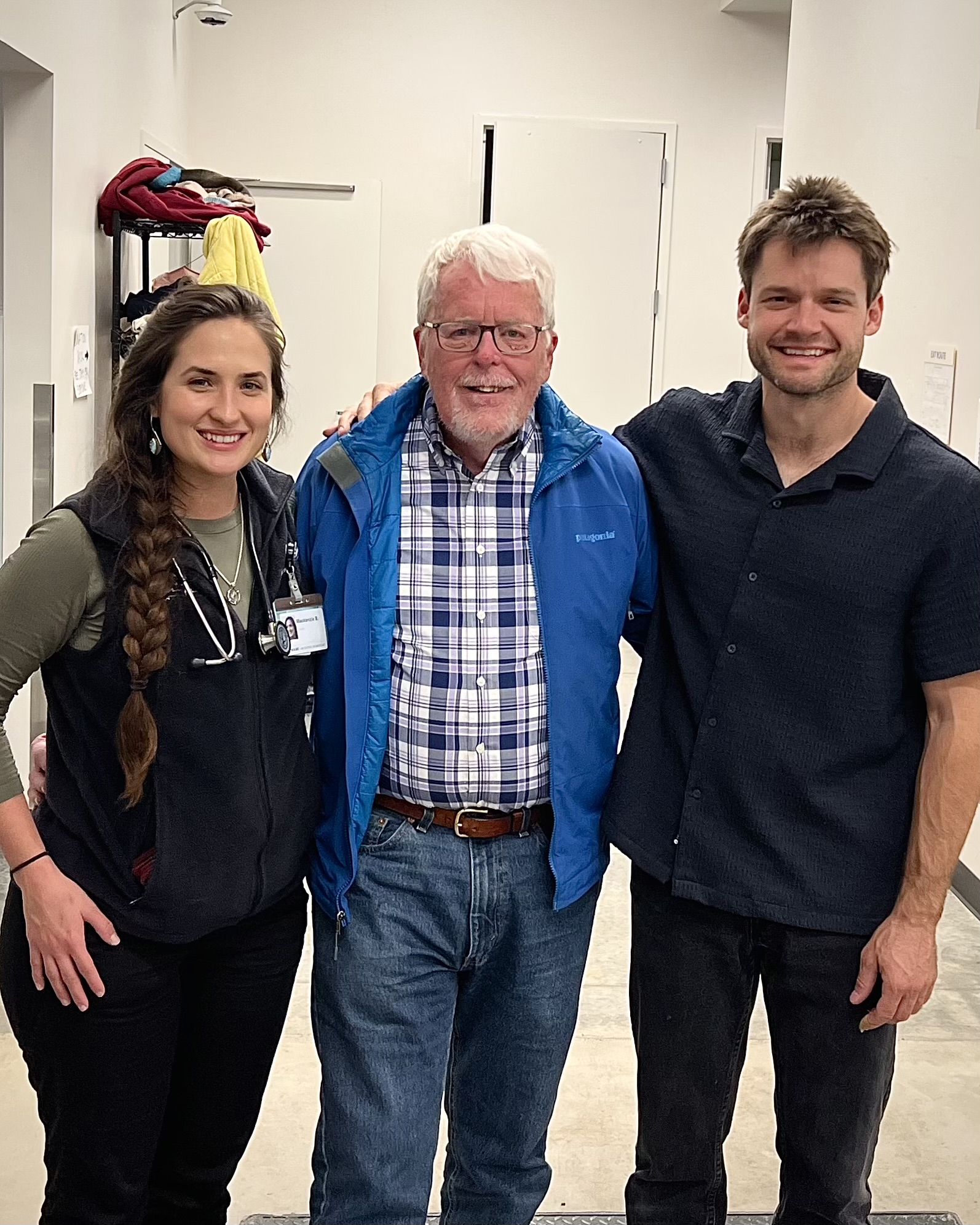
Second-year Montana WWAMI students Mackenzie Bernhardt and Tim Sonnenberg are leading an effort that blends clinical learning with community impact. As co-leads of the Neighborhood Health Initiative (NHI), they oversee twice-monthly foot care clinics in partnership with the Human Resource Development Council (HRDC)’s Homeward Point shelter in Bozeman, bringing essential health services directly to members of the community who need them most.
“Our faculty advisor, Dr. Gerald Groggel, has a long-standing and distinguished history of guiding this clinic and is deeply committed to improving access to healthcare for underserved populations and communities,” said Bernhardt.
The NHI clinics run from September through June and rely on teams of medical student volunteers to deliver hands-on, compassionate care. “At each clinic, our volunteers offer patrons warm foot soaks and basic foot care,” explained Sonnenberg.
Beyond foot care, NHI has grown into a truly interdisciplinary effort. The initiative collaborates with several community partners to address a broad range of health needs. “In partnership with Bozeman Health Pharmacy Residents, we host a community medicine cabinet stocked with over-the-counter medications,” said Bernhardt. “A representative from Community Health Partners/One Health is also present to help patrons schedule primary care appointments and navigate Medicaid enrollment.”
The clinics also provide preventive health services thanks to NHI’s ongoing collaboration with the Gallatin County Health Department. “At every clinic, patrons can access HbA1c testing and a wide variety of vaccinations,” Sonnenberg noted. “It’s a community-driven model of care—one that really emphasizes meeting people where they are and making healthcare accessible in every sense.”
For both student leaders, the work has been deeply rewarding and formative. “This experience has been profoundly meaningful,” Bernhardt reflected. “It’s given us—and our fellow medical student volunteers—the opportunity to build trust with an underserved community that often faces stigma in both society and healthcare settings.”
Sonnenberg echoed that sentiment, emphasizing the broader lesson in empathy and connection. “As future physicians, we aim to foster genuine and lasting relationships through compassionate care,” he said. “Every clinic reminds us that small acts—like washing someone’s feet or listening to their story—can have a powerful impact on both health and human dignity.”
Through their leadership, Bernhardt and Sonnenberg are carrying forward a tradition of service that reflects the heart of WWAMI’s mission: learning medicine through community partnership and care that uplifts everyone.
Sign up for the Montana WWAMI newsletter to stay in the loop on the latest stories, achievements, and updates from our incredible students, faculty, and communities across the region.