
For first-year Alaska WWAMI students Bhargavi Pochi and Shannon Miller, service learning is about more than volunteer hours. As co-leads for the Alaska AIDS Assistance Association (4As) Service Learning Advisory Committee (SLAC), the two students are working directly with Anchorage’s most vulnerable community members while gaining firsthand insight into addiction medicine, harm reduction and compassionate care.
Both students were drawn to 4As because of previous experiences working with people affected by substance use disorders and housing insecurity.
Before medical school, Miller worked at a youth shelter serving young people experiencing homelessness. Many struggled with substance use disorders, introducing her to harm reduction principles for the first time.
“I knew going into medical school that I wanted to stay involved in this kind of work and 4A has been a great way to do that,” Miller said.
Pochi had a similar experience during her undergraduate years in South Florida, where she volunteered and conducted public health research at a needle exchange program.
“It was a formative experience for me and showed me what medicine, public health, and community work can do for people,” Pochi said. “I love the values that 4A upholds: unconditional love for all, acceptance, harm reduction, meeting people where they’re at, and providing compassionate, reliable care.”
4As provides education on STI testing, condom usage, PrEP, and so much more. Through their volunteer work, both students have seen the immense challenges many clients face every day, especially during Alaska’s harsh winters.
“Housing! Safe supplies! Food! Clothing! Bathrooms!” Miller said when asked what needs stand out most among the people served through 4As.
“I know my presence as a volunteer is directly helping people who access our services,” Pochi added. “Just one clean needle or one Narcan kit might just save someone’s life or prevent them from getting a lifelong illness.”
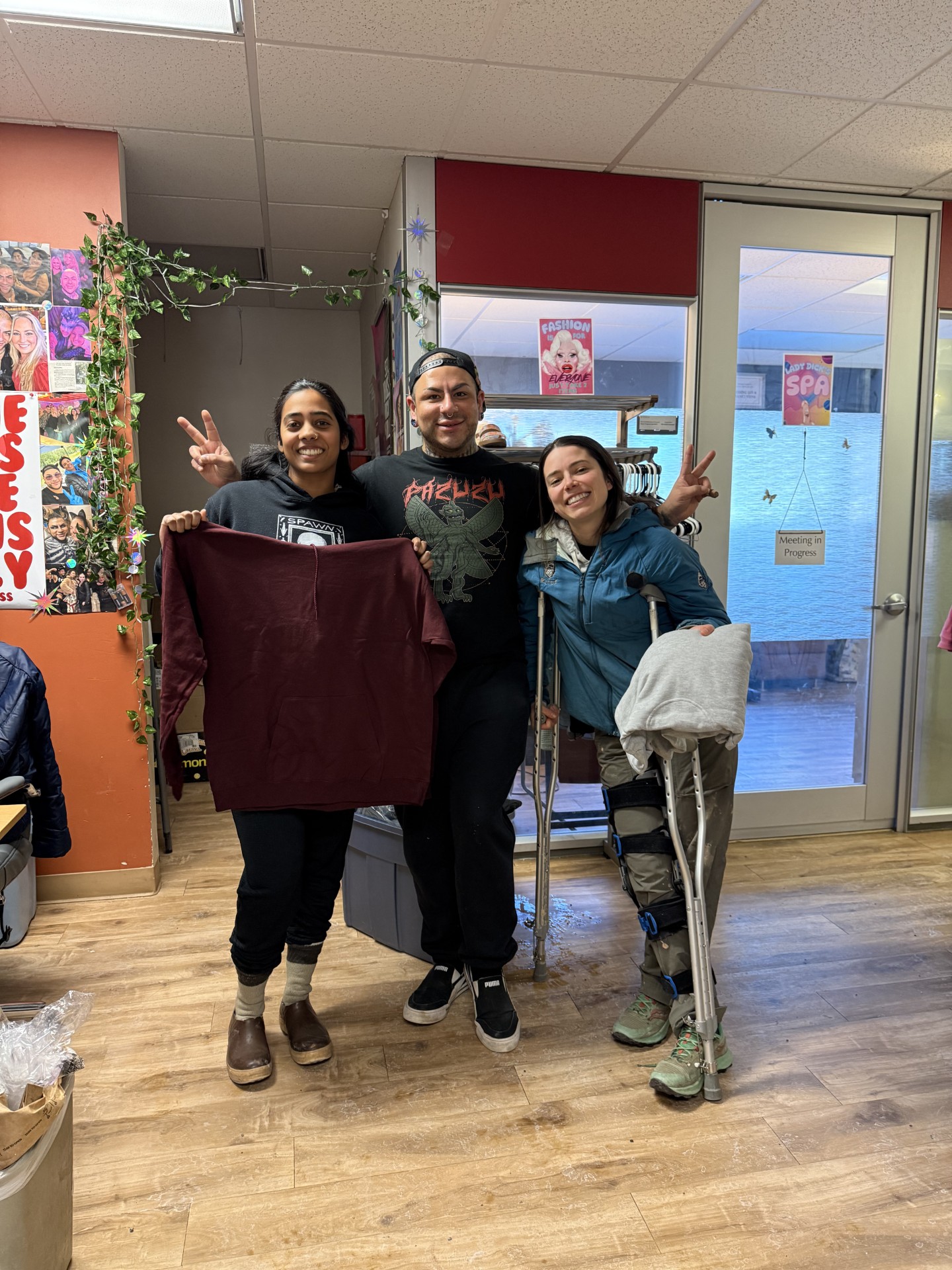
While 4A has many resources for those living with AIDS, the needle exchange itself is only funded to provide safe supplies. Donations of essential items such as clothing are always helpful, but the organization is usually short on warm garments. Seeing this need, the students secured a University of Washington SLAC grant to provide winter clothing for unhoused clients. They recognized that many donated items were not suitable for Alaska winters and used a $200 grant to purchase hoodies and sweatpants.
“During the darkest days of winters, temperatures can drop to -25F here,” Pochi said. “An extra layer or two might be the line between life and death. Once we put them out, they were gone in a few hours!”
The experience reinforced for both students the importance of compassionate, human-centered care.
“I think making a small contribution towards meeting people’s immediate needs is always rewarding,” Miller said. “Mostly, I enjoy having conversations with clients, joking, sharing music, etc.”
Both students say the work has strengthened their interest in addiction medicine and caring for marginalized populations. Miller will participate this summer in the NIH-supported Medical Student Addiction Research (MedStAR) program, conducting research related to addiction medicine across the WWAMI region.
For Pochi, volunteering at 4As has strengthened her belief in harm reduction as a humane and practical approach to care.
“Volunteering for 4A has also shown me how much reliable, consistent, and compassionate care can do for vulnerable people. If we can approach medicine in a way that doesn’t shame others and gives them opportunities to make small changes to benefit their health, I think that’s a win,” she said.