
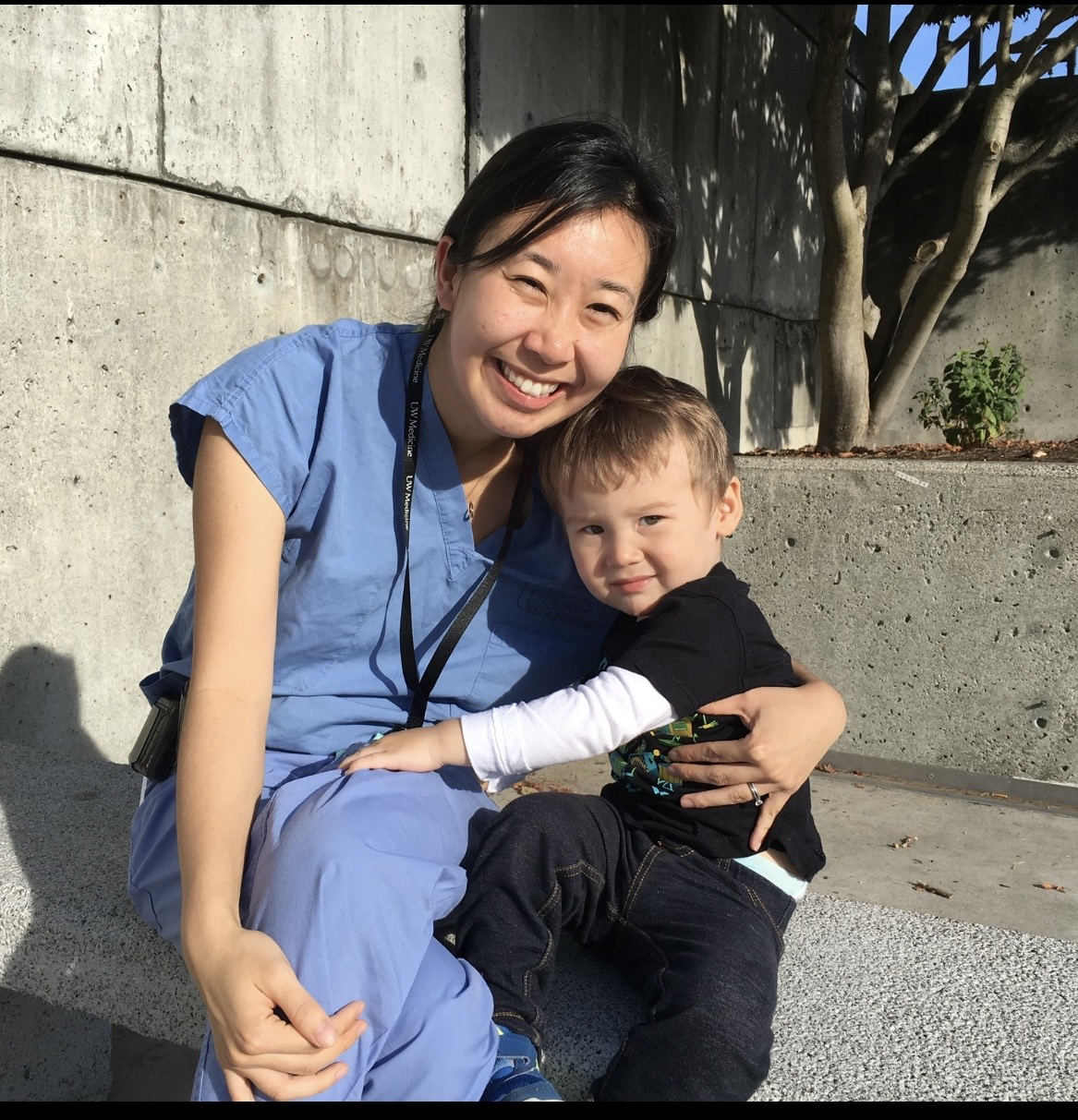
When Idaho WWAMI students walk into the interview room at State Hospital South in Idaho, their attending psychiatrist is already waiting for them on a screen. That is Eunice Stallman, MD, and for the next six weeks she’ll be their teacher, their supervisor, and often the person they turn to when the biggest questions of training start to feel like the biggest questions of life.
Dr. Stallman knows those questions well. She has lived them.

A path that kept circling back to UW
Dr. Stallman grew up in Redmond, Washington, earning her undergraduate degree at the University of Washington, and spent a year in AmeriCorps in Seattle before heading to The Ohio State University for medical school. When it came time for residency, she applied to exactly two psychiatry programs, because her family needed to be back in Seattle, near relatives, for intern year.
She matched the Boise track of the UW psychiatry residency: two years in Seattle, two in Boise. By the time she graduated, Boise had become home. Her family stayed, and she stepped into what she calls her dream attending job as a telepsychiatrist at State Hospital South, one of Idaho’s two psychiatric state hospitals. She also stayed on faculty, teaching UW-Boise psychiatry residents and WWAMI students.
WWAMI students had been rotating at the hospital before she arrived, and she didn’t hesitate. “Given my ties with UW, I was excited to step into a preceptor role,” she said. That was about five years ago, and she’s been precepting ever since.
Why psychiatry
She almost chose a different specialty. What tipped the balance was a simple question: what gave her the most meaning, even on an ordinary day of routine cases?
“I enjoy getting to hear people’s stories, and there is no better field than psychiatry to really hear what people have gone through, be a part of their healing journey, and gain perspective on humanity,” she said. “I am inspired every day by the resiliency of the human spirit.”
She also had role models. Her psychiatry mentors in medical school were people she admired not just as physicians, but in their family lives and their hobbies. “I wanted to be like them,” she said.
Teaching through a screen, together in the room
Dr. Stallman’s preceptorship is unlike most. She and two other attending psychiatrists work remotely, while the medical director, the staff, the students, and a psychiatry resident are all on site. The hospital had built its telepsychiatry system before the COVID-19 pandemic, and it works.
Students and the resident gather with patients in an interview room set up for videoconferencing, with Dr. Stallman joining on screen. The teaching flows directly from those encounters, as the team talks through each patient’s care. Students sit in on the daily interdisciplinary treatment team meeting and attend case conferences led by providers across the hospital.
Because many patients at State Hospital South are forensic patients, students drawn to that field get a rare window into it: legal education groups for competency restoration, and time observing the hospital’s forensic psychologist conducting competency evaluations.
“There is no one right way”
Ask Dr. Stallman what she loves about precepting and she’ll tell you about the energy students bring, and how teaching keeps her own knowledge sharp. But the heart of it is something else.
“It’s an honor to be a part of their journeys as they figure out what they want to do and mentor them through big life decisions that also happen alongside big career decisions,” she said.
Her own training was full of those decisions. She got married. She had her first baby in her third year of medical school, her second during internship, and her third during residency. She applied to only two programs. She took a three-month break between the intern year and the second year. During part of her third year, she trained three days a week so she could be with her children. She graduated four months after her classmates.
“It was absolutely the right decision for me and had no negative effect in starting my dream attending job after graduation,” she said. Her mentors, she added, were instrumental in helping her navigate each of those choices. “I hope to be able to give back as a mentor and help share my experiences and help show that there is no one ‘right way’ to go through medicine.”
She watches that growth happen in real time. “Every time I work with a student and see their progression and confidence grow throughout the rotation, I am filled with pride and reminded of why this work matters.”
One student in particular stays with her. He wanted to return to Boise for residency, the very program she had graduated from. He matched. Then, a few years later, he walked back into State Hospital South, and she got to supervise him again, this time as a resident.
Not every student chooses psychiatry, and she’s glad for that too. Most go on to other specialties, she said, carrying with them the skills to care for patients with mental health difficulties wherever they land.
What she wants students to know
Psychiatry offers something rare, Dr. Stallman said: time. In many treatment settings, clinicians get to know their patients more deeply than in almost any other specialty. “Once you know what someone has been through and their underlying factors for how they think or act, you are able to help someone make meaningful changes in their lives.”
That depth comes with weight. Some stories will stay with you, she said, and students need to make time to process them and build some distance from the hardest things they hear.
Her advice for anyone considering the field is simple. “Stay curious and flexible. There are so many things you can do in psychiatry, whether it is public policy and advocacy, inpatient, outpatient, consults, forensics, therapy, procedures like ECT and TMS. Keeping an open mind and willingness to try new things will take you far.”
Home
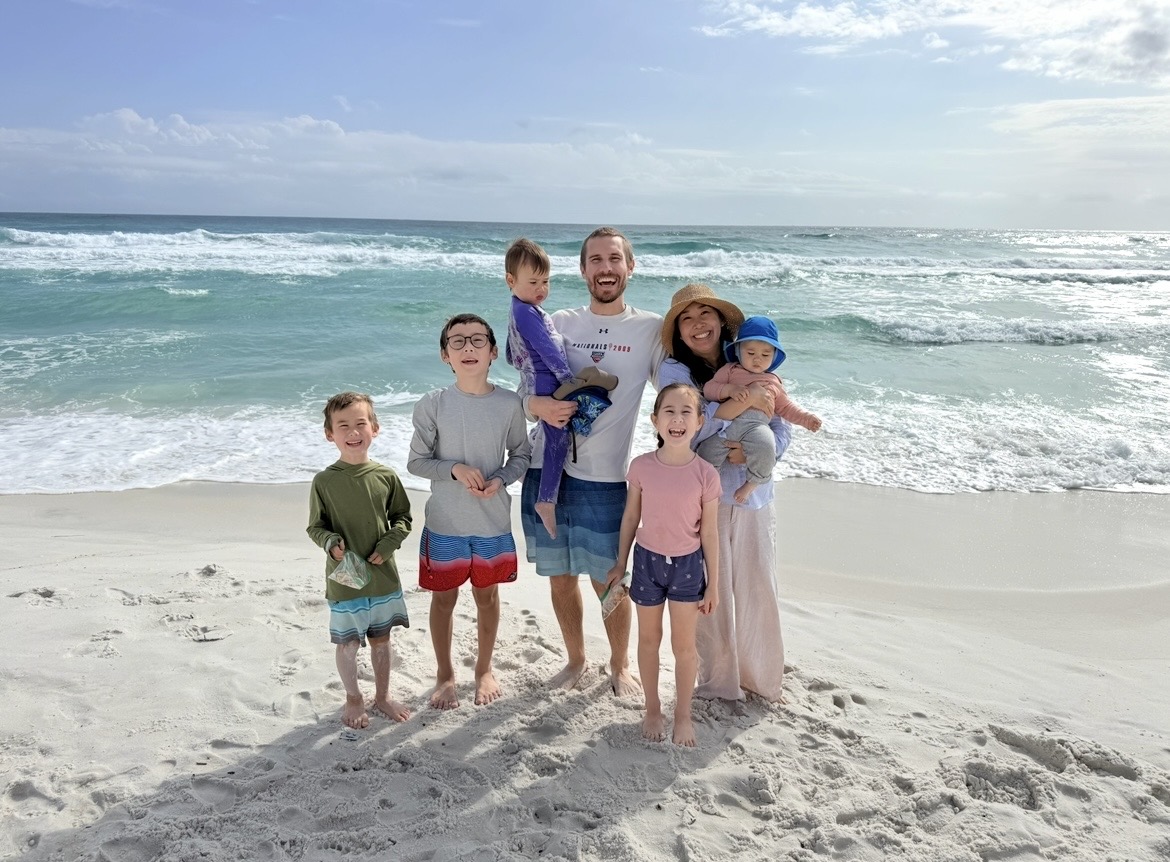
Dr. Stallman now has five children, ages one to ten, and most of her time outside the hospital belongs to them: parks, kid events, and whatever each of them is into at the moment. Despite the size of their crew, the family travels extensively, and she decompresses by researching and planning the next trip. When the house finally goes quiet, she reads, and she writes. Some of her narrative writing has been published, a way, she said, to process what she carries and to stay creative.