
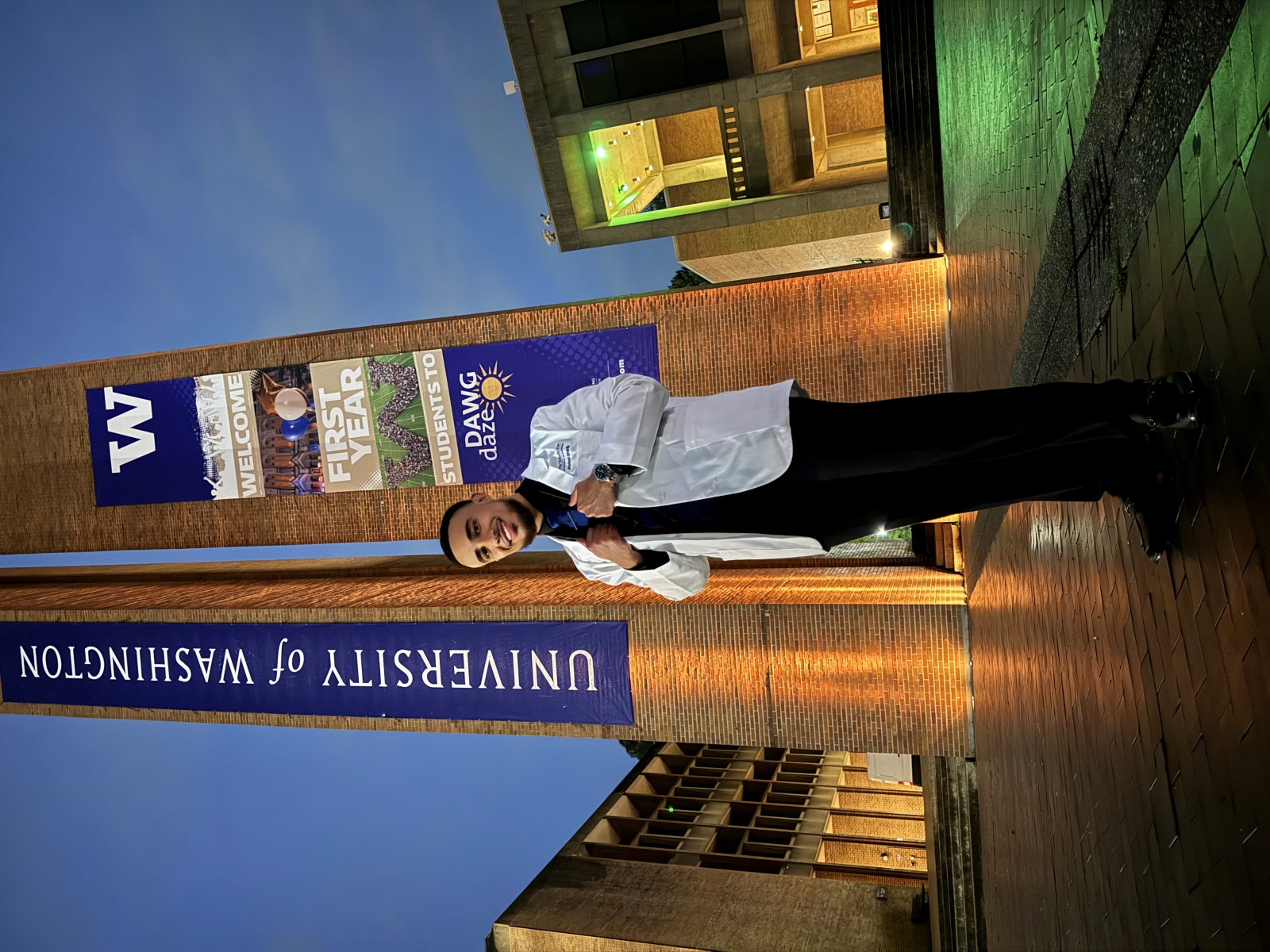
For Waleed Gharib, a third-year medical student at the University of Washington School of Medicine and co-lead of the Firearm Injury Reduction Education (FIRE) group, expanding access to knowledge about firearm safety and injury prevention is both a personal and professional calling.
“I have seen friends and family experience the pain and trauma caused by firearm violence, and I have lost several friends to it,” Gharib said. “Those experiences are a major reason I chose medicine. I want to confront this problem directly and make a difference in communities like mine.”
Gharib joined FIRE during his first year of medical school. Through the group, he began working closely with Dr. Gregory Engel, a retired family medicine physician who has dedicated much of his career to firearm injury prevention education.
Dr. Engel developed the group’s educational program and has spent years building relationships with schools and bringing evidence-based injury prevention education to students across Washington. His leadership has provided a foundation for medical students, including Gharib and fellow co-lead Maamoon Saleh, to contribute to the program’s education, research and community outreach.
“Dr. Engel is truly the driving force behind this program,” Gharib said. “His dedication, mentorship and years of work have made everything we do possible. He has shown us what it means for a physician to remain committed to the health of their community throughout an entire career.”
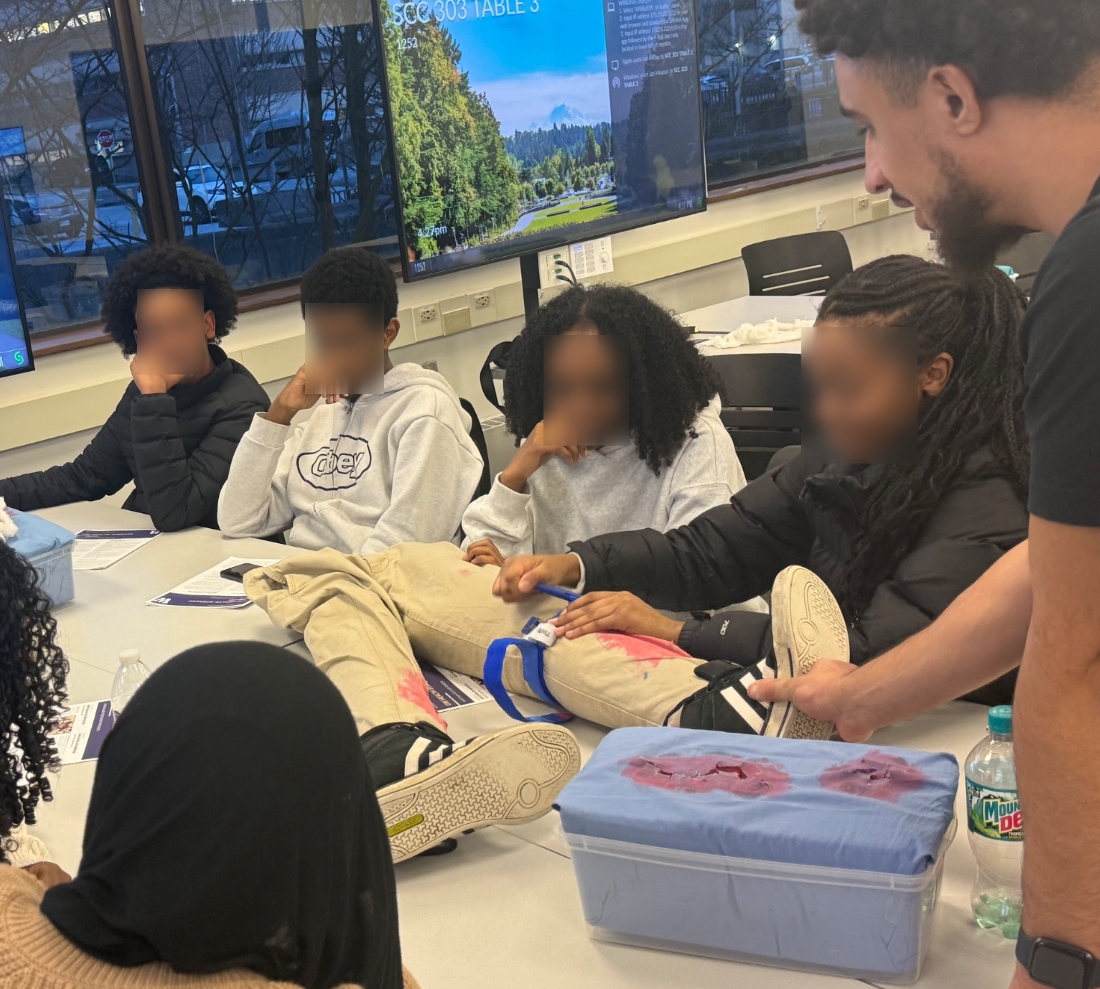
FIRE provides high school students with factual, evidence-based information about firearm injuries and practical ways to reduce risk. The curriculum approaches firearm safety as a health and injury-prevention issue, covering topics such as firearm injury epidemiology, suicide prevention, safe storage, relevant Washington laws, prevention resources and steps students can take if they are concerned about their own safety or that of someone else.
“Our goal is not to tell students what to think,” Gharib said. “We want to give them accurate, nonpartisan information so they can understand the risks, make informed decisions and help keep themselves, their friends and their families safe.”
As co-leads, Gharib and Saleh help organize events, deliver presentations in high school classrooms and contribute to research evaluating the program’s effectiveness. For medical students, the work provides an opportunity to apply concepts from their education to a real-world public health concern. They also gain valuable firsthand experience with science communication, health education and community outreach.
FIRE’s current work builds on the contributions of previous student leaders. “This work has always been a team effort,” Gharib said. “Our previous leads—Nevin C. Kalaf, Michelle Wang and Katrina Dank—put tremendous effort into making this group what it is today. Maamoon Saleh continues that work alongside me as co-lead. I am grateful to be part of a team in which every generation of students builds on the work of those who came before.”
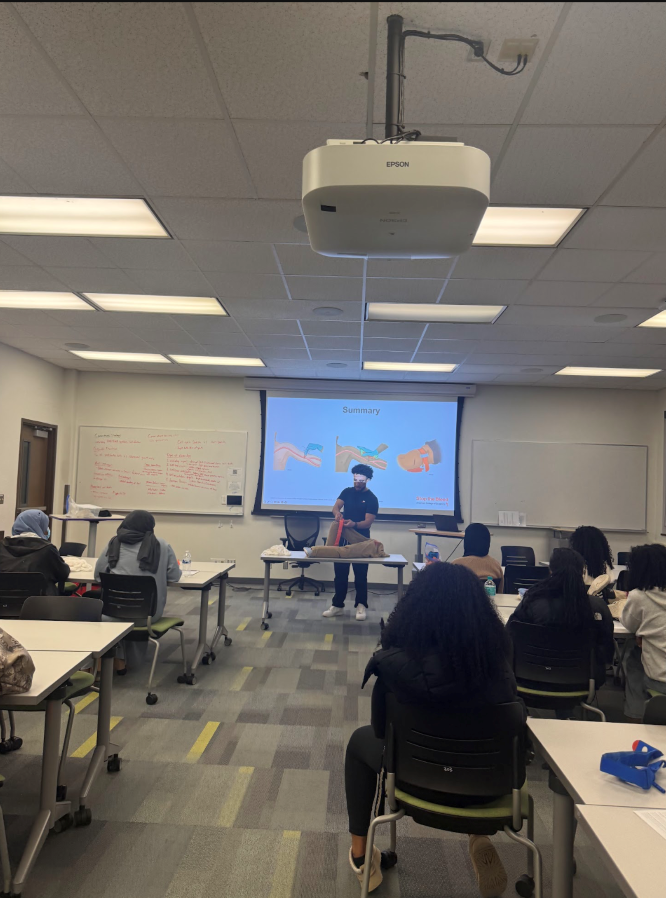
In 2025 alone, the program’s educational efforts reached more than 1,000 high school students. The group has also begun conducting studies to determine whether its classroom-based approach meaningfully improves students’ understanding of firearm safety and injury prevention.
“A big goal of this initiative is to create a program that is sustainable and scalable,” notes former FIRE lead Nevin C. Kalaf. “For this, we dedicate significant effort to collecting data and connecting with leaders on this topic across the region (and now country), which allows us to be better informed to enter communities respectfully as we expand reach. It is also why we publish our results, to share with others what has and hasn’t worked.”
During the 2024–2025 academic year, medical students and physicians delivered presentations at five western Washington public high schools. Among the 908 students who participated in the study, the 755 students who received the presentation scored significantly higher on firearm injury knowledge questions than students in the comparison group.
High school students also rated learning about firearm safety and injury prevention in school a median of 9 out of 10 in terms of importance. Participating teachers supported including firearm safety education in the high school curriculum and rated the presentation highly for relevance and clarity while rating its perceived bias very low. The results of the pilot study were published in full.
The team is now expanding its research to better understand how parents, teachers and school administrators across Washington view school-based firearm injury prevention education. The study will examine their questions and concerns, the conditions needed for successful implementation, and how age-appropriate education can be delivered responsibly and with community input.
For Gharib, the experience has also highlighted the many ways physicians can contribute to public health beyond clinical settings. Medical training can prepare future physicians to not only treat injuries, but also recognize risk factors, educate patients and families, conduct research and help communities reduce preventable harm.
“FIRE has shown me the impact I can make as a future physician,” Gharib said. “Physicians are leaders in their communities, and I want to use that position to make a meaningful difference.”