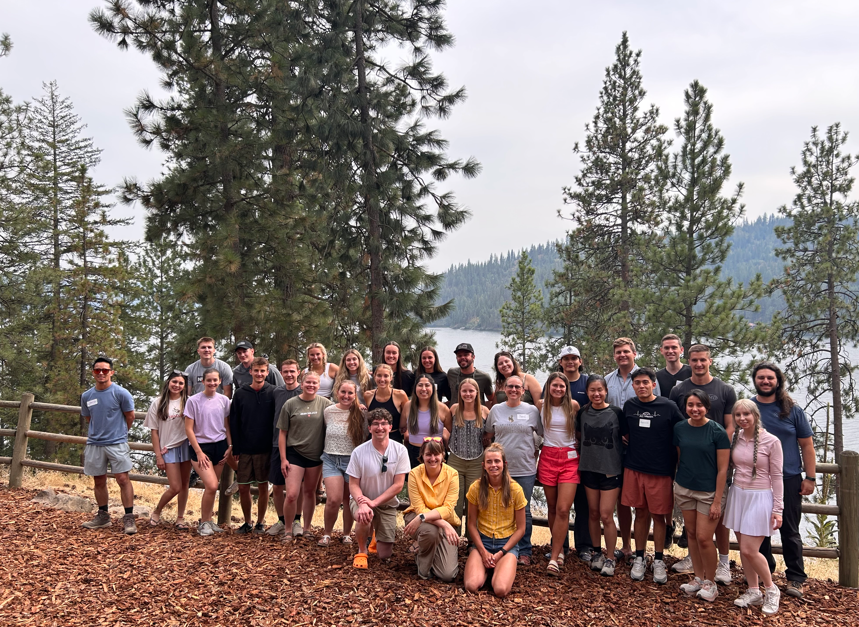
 WWAMI TRUST students from Alaska, Idaho, Montana, Washington, and Wyoming gathered in Coeur d’Alene recently for a retreat designed to strengthen their connection to rural medicine and, perhaps just as importantly, to one another.
The retreat (Aug. 18-21, 2026) brought together TRUST students, leaders, and physicians from across the five-state WWAMI region for presentations, workshops, and informal conversations. Sessions covered practical leadership, rural generalism, advocacy, remote and low-resource medicine, and rural specialty opportunities.
For Alaska WWAMI TRUST student Mauri Butzke, one of the most valuable parts of the retreat was learning how TRUST looks in 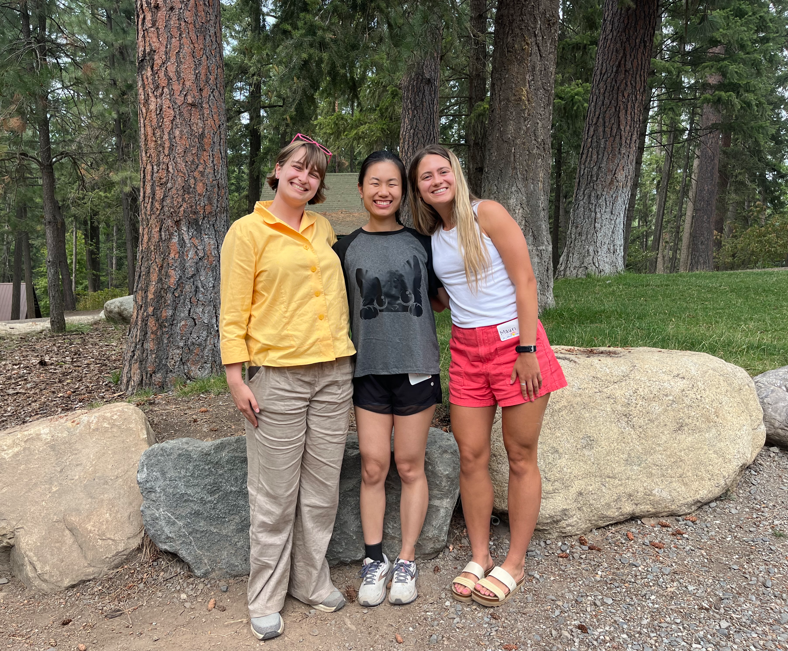 different communities and connecting with students who share a commitment to rural health.
“We had the opportunity to meet TRUST students from other sites, learn about their foundation sites, and discuss what RUOP is like at each location,” she said. “Overall, it was a rejuvenating experience and a great way to prepare for the final two blocks of Foundations!”
The cross-regional gathering also gave students an opportunity to hear directly from physicians practicing in different rural settings. Alaska physician Megan Young, DO, of the Yukon Kuskokwim Health Corporation (YKHC) in Bethel, led a session on Remote/Low-Resource Medicine.
YKHC operates the Yukon Kuskokwim Delta Regional Hospital, which serves approximately 30,000 people across a region roughly the size of Oregon. Its fifty villages are not connected by roads.
Dr. Young first experienced remote Alaska health care during her second year of residency when she visited Bethel for a rotation.
 “I just fell in love with the work,” Dr. Young said. “My patients are predominantly members of the Alaska Native community and are some of the kindest and definitely the most resilient people in the world. It’s a wonderful community to serve.”
She told students that practicing in remote Alaska requires flexibility, teamwork, and ingenuity. Weather and geography can change plans quickly, while limited resources require providers to find creative solutions and work closely with colleagues both near and far.
One recent case illustrated that reality: A critically ill child and a severely injured trauma patient in the same village both needed emergency evacuation. Working with a physician associate in the village, who managed both patients with limited medications and supplies, Dr. Young and her team coordinated separate aeromedical crews—one from Kodiak and one from Bethel. The child was stabilized at YKHC, 146 miles away, while the trauma patient was flown directly to a hospital in Anchorage, 400 miles away, and taken immediately to surgery. Both patients made remarkable recoveries. For Dr. Young, the experience underscored the complex decisions rural providers make about what is best for the patient, what is feasible in the environment and how to make the best use of available resources.
“Healthcare has always been a team sport, but your team is so much bigger,” she added, “and even if you’re very far apart, you’re never alone. Because of this, there is a lot of innovation that occurs. You quickly find that, even if you don’t have many resources, you can do a lot with what you do have, if you’re creative.”
That team extends beyond the hospital to community health aides in villages, aeromedical providers, and specialists at hospitals. Getting to know those key players is essential, Dr. Young said.
She also emphasized that knowing where to go and who to ask for answers is important no matter where you practice.
“Having support makes a tremendous difference,” she said. “The weather may be terrible, technology may fail, and you may not have the resources you wish you had, but these are all out of your control. Knowing where you can make an impact is crucial, otherwise your energy is being wasted. These are lessons you can take no matter where you end up.”
For TRUST students preparing to serve rural communities throughout the WWAMI region, that may have been one of the most important lessons: Rural medicine may look different from state to state, but its challenges, rewards and commitment to community connect them all.