
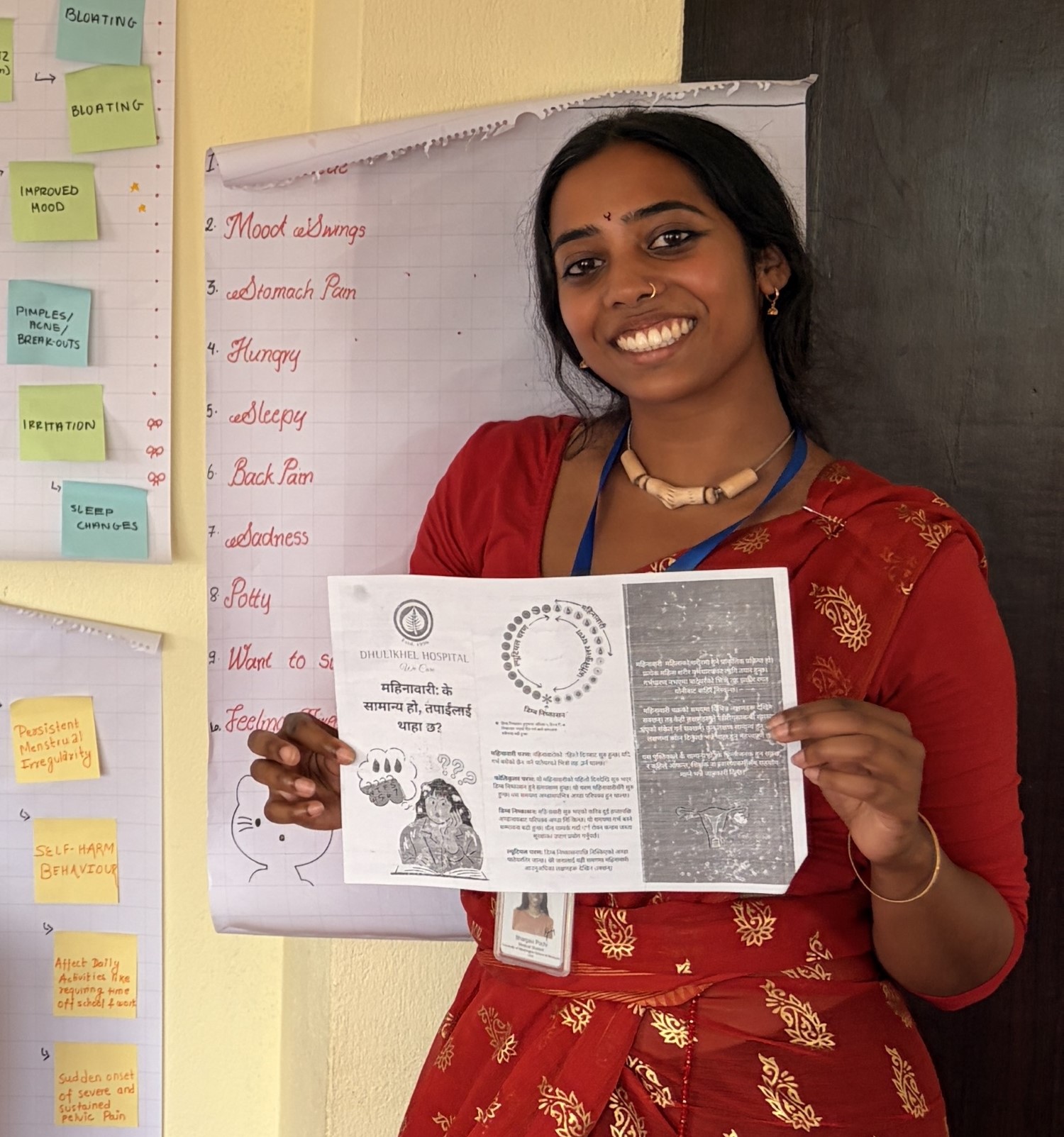
For Bhargavi Pochi, a second-year Alaska WWAMI student, an eight-week summer experience in Nepal offered a chance to explore global health while contributing to a community-based health project with real impact. As part of her Triple I experience through the Global Health Immersion Program (GHIP), Pochi traveled to Dhulikhel, Nepal, where she worked with Dhulikhel Hospital’s Community Program team and Adolescent Health Clinic.
“My specific project was focusing on improving access to education about abnormal menstrual symptoms with the intention of improving long-term health outcomes in Nepali girls and women,” Pochi said. This took the form of a Nepali-language health education brochure created through an iterative, community-based process, including focus groups with adolescent girls, rural women and public health students, as well as consultations with physicians.
The team visited local schools to gather feedback on the brochure and hosted menstrual education workshops with students. The finished materials were printed in Nepali and distributed through the Adolescent Health Clinic and Dhulikhel Hospital’s rural outreach centers.
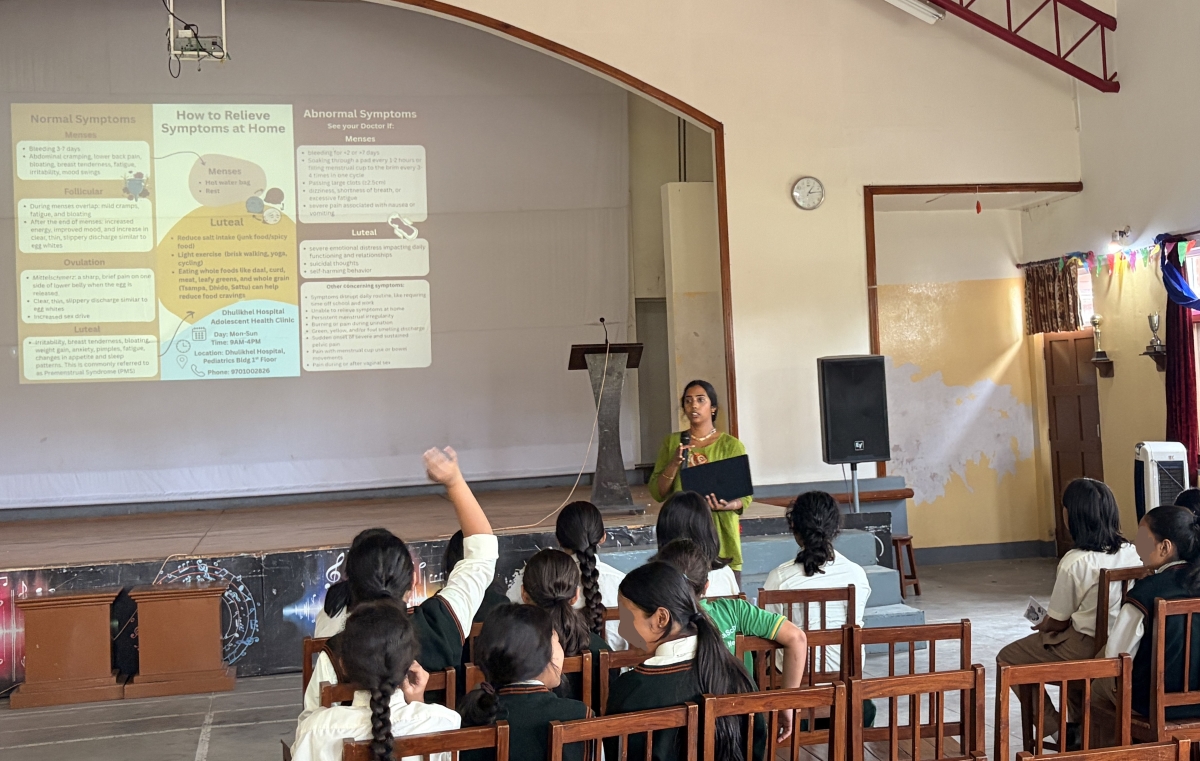
Shortly after returning home from Nepal, Pochi learned that the abstract of her project, titled “Beyond Menstrual Hygiene: Promoting Early Recognition of Abnormal Menstrual Symptoms Amongst Adolescents in Nepal,” had been accepted as an oral presentation to AMPATH Nepal’s 2026 research symposium. AMPATH Nepal is a collaborative global health partnership between Dhulikhel Hospital, the Arnold Institute of Global Health at Mount Sinai, and the AMPATH consortium aims to strengthen community-focused, high-quality medical care, education and research.
During her travels, Pochi also gained firsthand insight into Nepal’s healthcare system. Dhulikhel Hospital uses a model in which patients “pay-what-they-can” and has established 18 rural outreach clinics throughout the Kathmandu Valley. Pochi visited an outreach clinic in Baluwa, where she shadowed dentistry services and helped with a menstrual education workshop. She also spent time in the hospital’s high-risk maternity ward, shadowing OB/GYN residents.
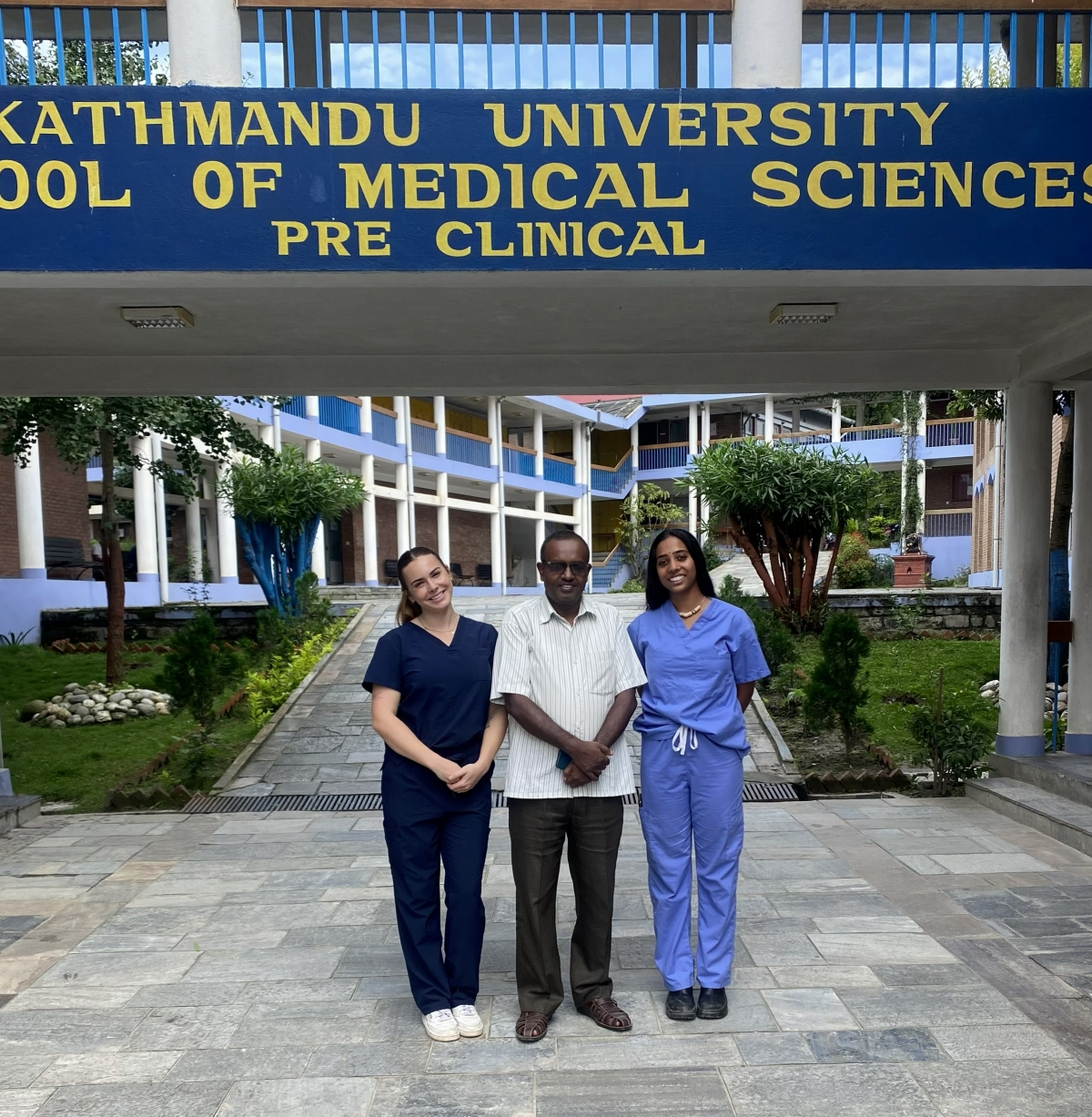
Her experience extended into advanced medical education as well. “I had the opportunity to tour the local medical school, Kathmandu University School of Medical Sciences (KUSMS), with the head of the anatomy department, Dr. Dil Islam Mansur. During the tour I got to see their cadaver lab and learn about how the school structures their anatomy curriculum. I met with several faculty members and learned about the medical school curriculum. I even got to sit in on a first-year medical school class about community health and water-borne disease.”
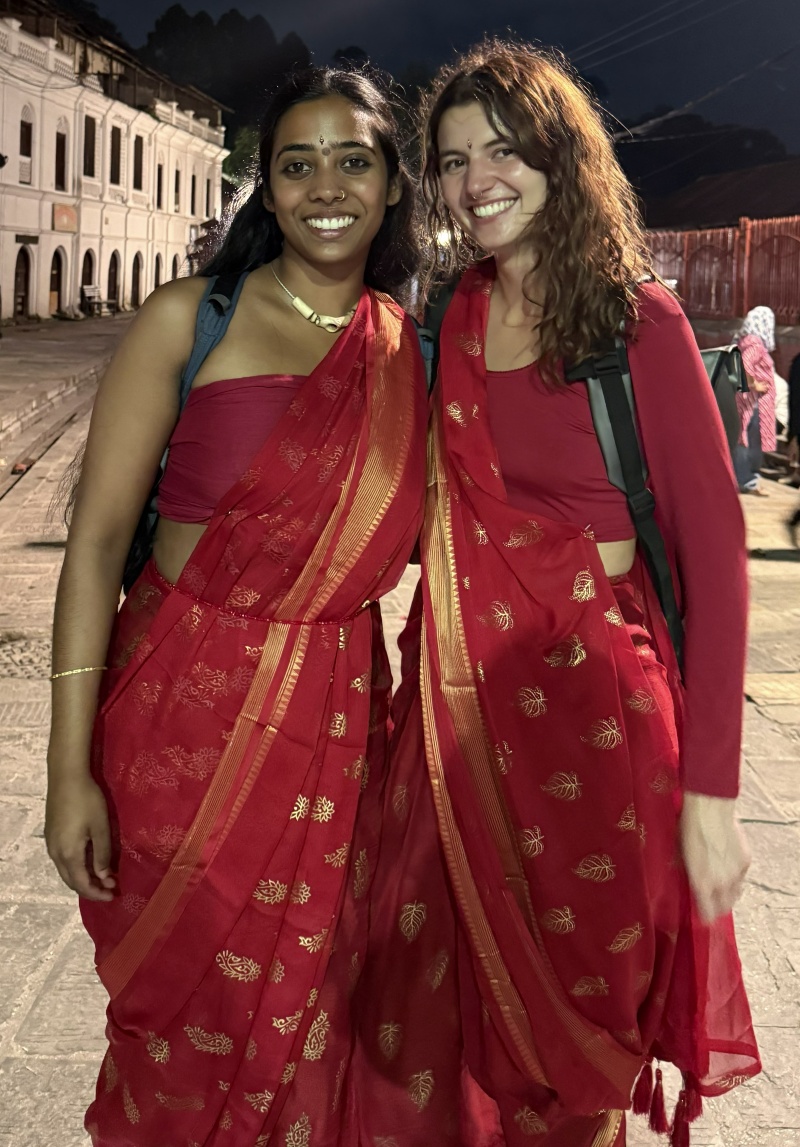
Outside of her work, Pochi embraced opportunities to connect with Nepali culture. She participated in a cultural dance performance at Dhulikhel Hospital’s annual leadership symposium, helped teach women in a rural community to make reusable cloth pads from old saris, visited Pashupatinath Temple during Shrawan (the fourth month in the Nepali Hindu calendar, dedicated to Shiva), enjoyed a traditional Newari feast in Bhaktapur, and completed the Mardi Himal trek. She even picked up some Nepali by practicing with coworkers, friends and strangers on public buses.
“Participating in GHIP Nepal just affirmed my decision to go to medical school because global health really exemplifies the humanity aspect of medicine,” Pochi said. “There is so much to see and learn about the world and I am excited to continue exploring as I grow in my career.”
Her time in Nepal also highlighted unexpected connections to her home region. “There are a lot of parallels between healthcare in rural parts of Nepal and rural parts of Alaska, especially when it comes to limited provider availability, scarce supplies, long travel times, and impacts of climate on patient access to care,” she reflects. “I feel like there is a strong opportunity for collaboration, learning and growth between the U.S. and Nepal.”
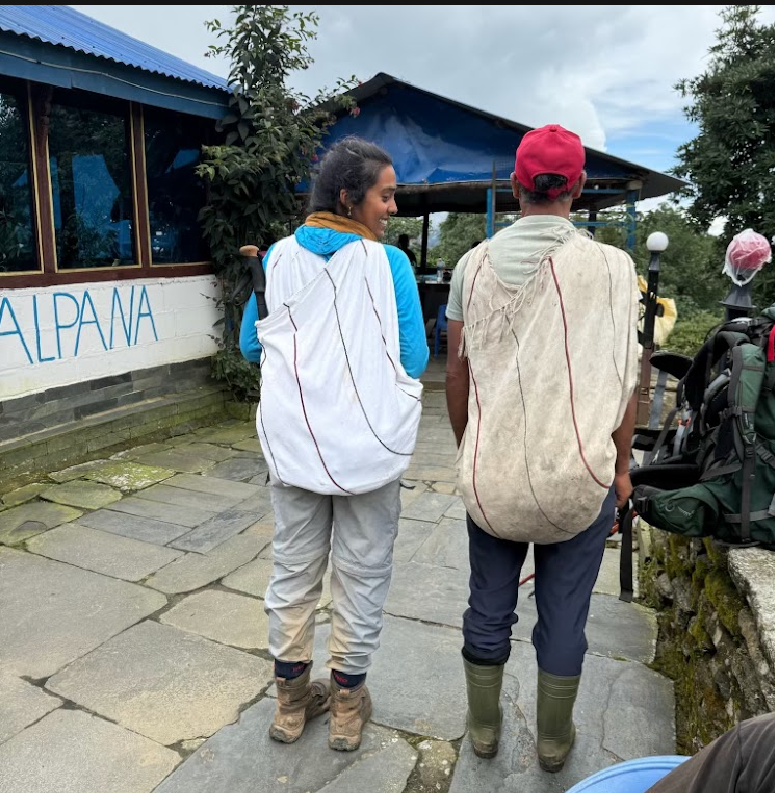
For Pochi, the most lasting part of the experience was not one particular moment, but the people she encountered along the way. “The people here have been so welcoming, kind and helpful which made it so easy to find a sense of belonging here,” she said.
Editor’s Note: The Bagmati province, which Dhulikhel Hospital is in, has been significantly affected by the recent flash floods in Nepal. Learn more about the hospital’s response to this crisis and the ongoing relief effort.