
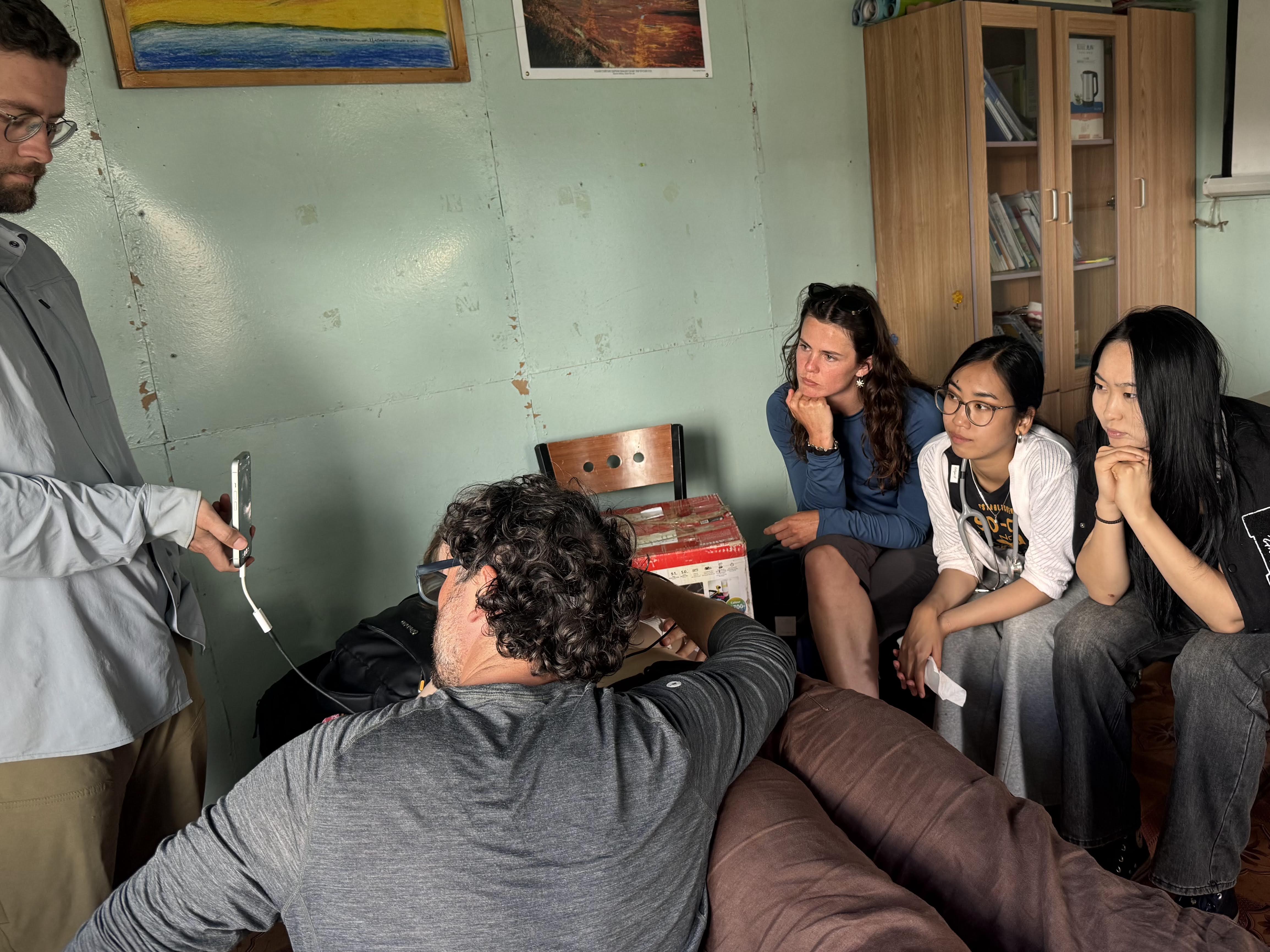
 The landscape stopped Mikayla Bullman in her tracks not because it was foreign, but because it wasn’t. Rolling grassland, wide sky, communities scattered far from the nearest hospital. “Rural Montana is not all that different,” she would later reflect. “The landscape even looks the same.”
This summer, Bullman and fellow Montana WWAMI second-year student Lucy Corbett spent roughly three and a half weeks in rural Mongolia; 25 days in the country, 18 of them camping as part of a medical service team organized by BioRegions International, a nonprofit based in Bozeman. The trip was built around a single idea, one that will sound familiar to anyone who has practiced rural medicine: “One Health,” the understanding that human health is inseparable from the land we live on and the work we do.
Over those weeks, the team moved from town to town, sum to sum, in Mongolian, mostly by car, sometimes on horseback, setting up screening clinics and running workshops on hypertension prevention, CPR and basic life support, and soil health. In all, they saw 376 patients and conducted research on the connection between salt and hypertension. Flexibility was part of the curriculum: shifting clinic schedules, broken-down vehicles, and setting up camp in the rain became daily lessons in keeping a team steady and a mission on track. (One patient, it should be noted, was four-legged. A team horse picked up an injury along the way and earned a spot on the roster.)
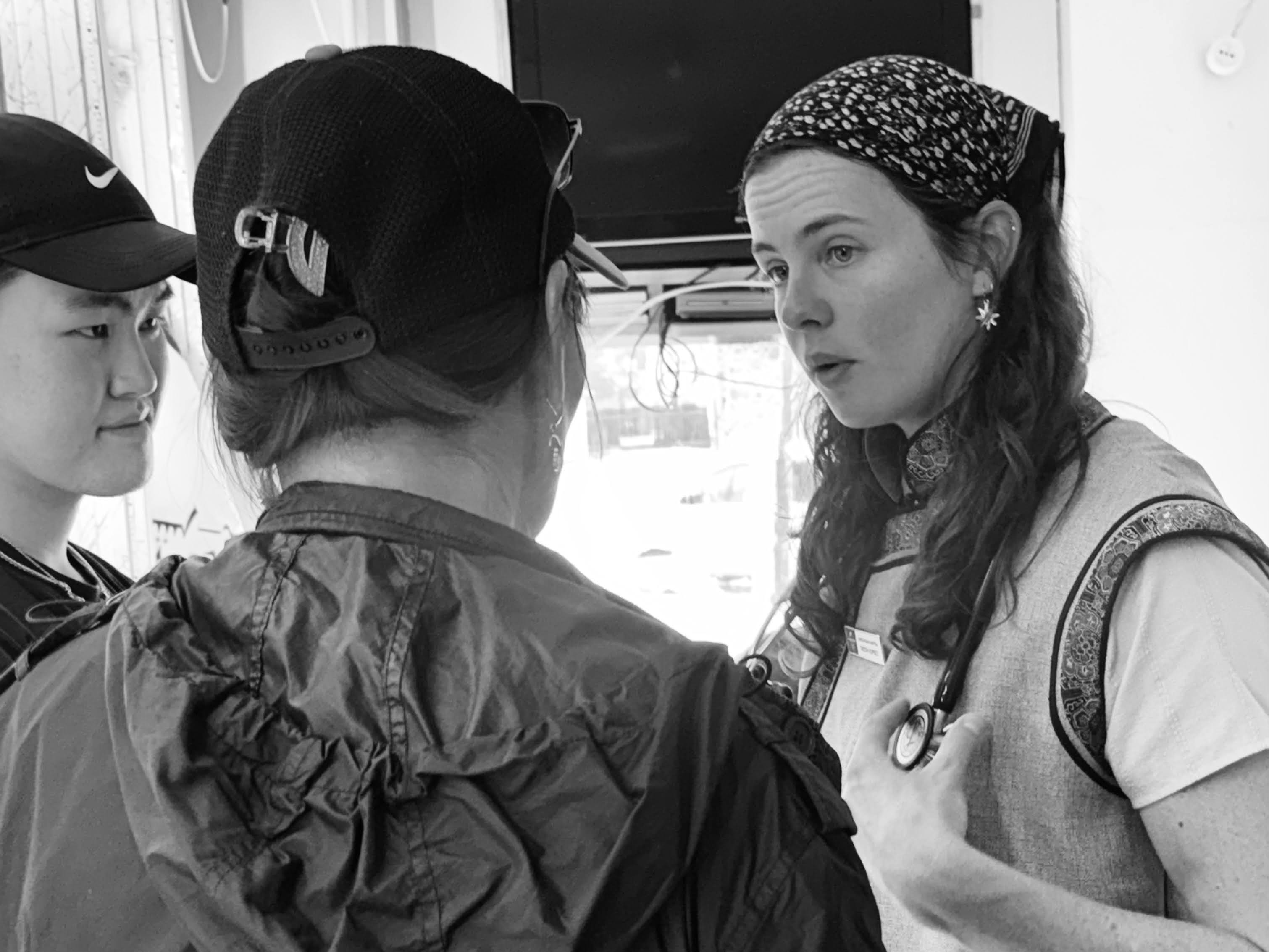
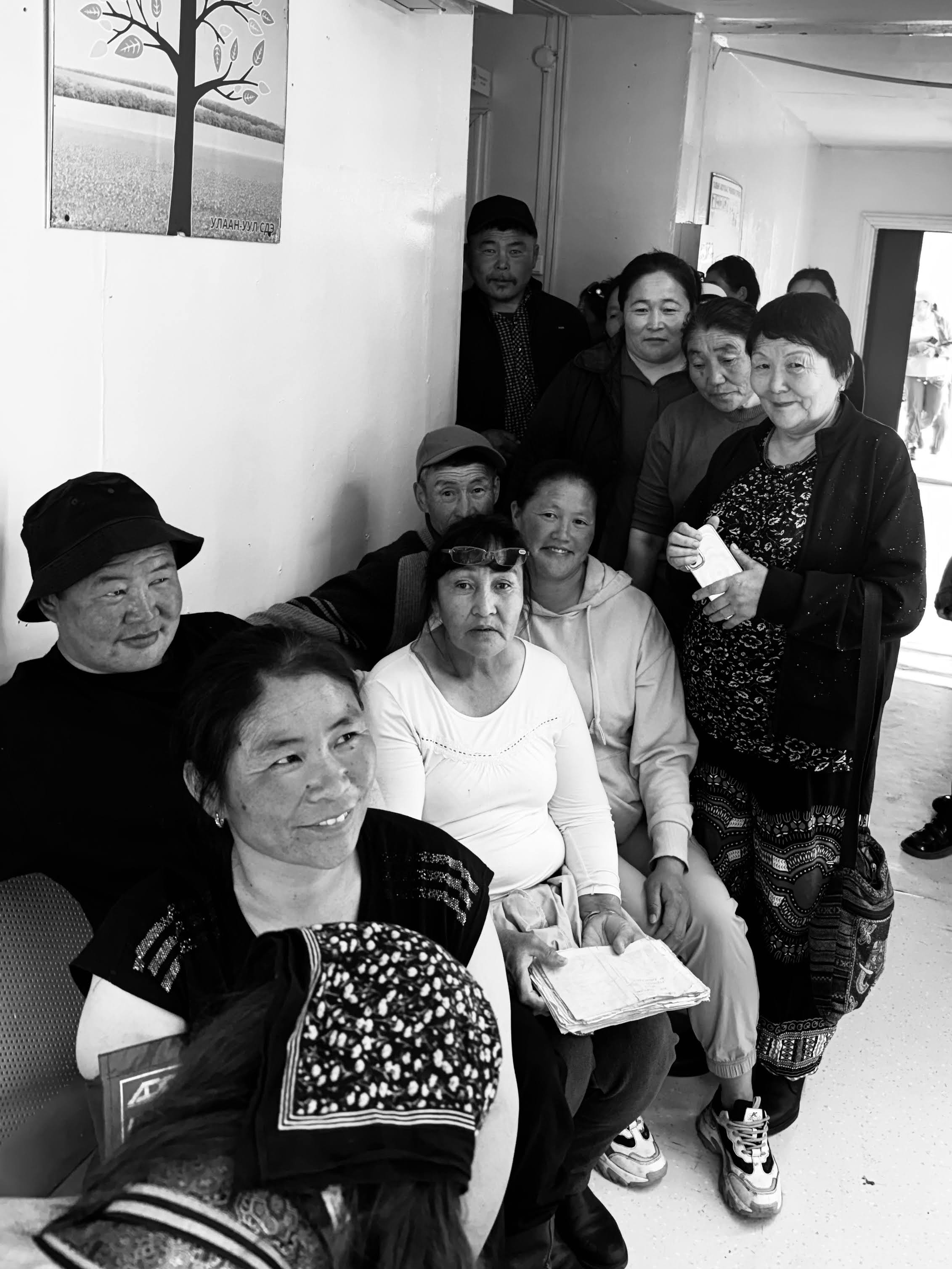 None of it would have been possible alone. The American team, two medical students, a family medicine resident, two family medicine attendings, a labor-and-delivery nurse, a soil scientist, and an education researcher worked hand in hand with a Mongolian team of local leads, drivers, translators, cooks, medical students, and physicians. That partnership was the difference between visiting a place and truly caring for it.
Much of the care happened across a language barrier. For both students, that turned out to be one of the trip’s deepest lessons rather than its biggest obstacle. “Although we did not share a common language with many of our patients, I realized that compassion and human connection extend far beyond words,” Corbett said. “Some of the most meaningful communication happens without speaking at all.” Bullman found the same: trust, she learned, could be built through eye contact and validating body language long before words caught up. “Humanity is deeply driven by the desire to connect.”
Both students say they came home changed and, notably, both came home thinking about Montana. For Corbett, who hopes to return to the state to care for rural communities, Mongolia was a lesson in cultural humility, adaptability, and “the importance of understanding the relationship between people, place, and health.” She calls it “an experience that will continue to shape the kind of physician and person I hope to become.”
 For Bullman, whom the trip was a first venture into both rural and global medicine, “and I truly hope that it is not my last,” the throughline was prevention. Serving communities that sit far from any emergent care, she said, made plain how much health education and relationship-building matter. “Rural Montana is not all that different,” she said. “I’m stepping away from this experience motivated to keep relationship building and prevention at the top of my list.”
That is, in the end, exactly what the WWAMI program is built on: physicians who understand that health is tied to place, and who choose to serve the places that need them. Mongolia simply drew the lesson in sharper relief ; a reminder that the ties between people, land, and care hold, whether you’re on the Mongolian steppe or the Montana plains.
WWAMI thanks BioRegions International for the partnership, and the Mongolian team, physicians, and communities who made the trip possible.