
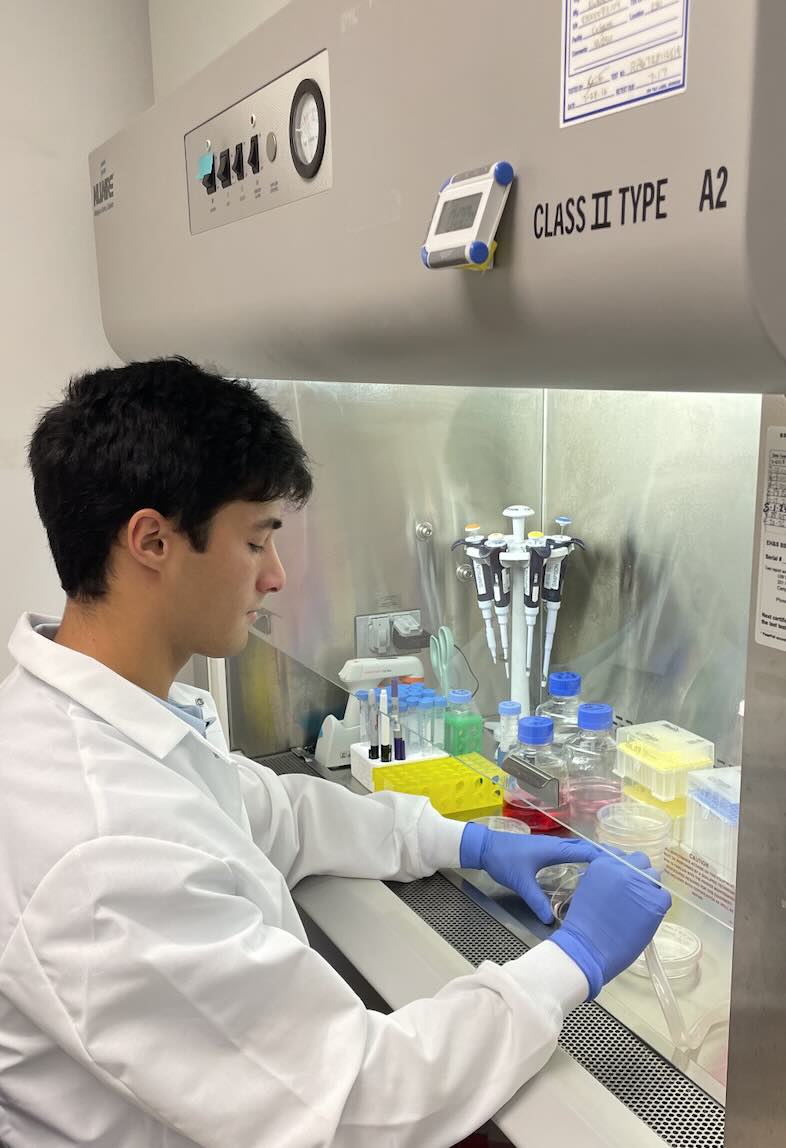
Michael Martin grew up in the Seattle area with two things in mind: get to medical school, and get there by way of a smaller Jesuit college away from home. He found that at Gonzaga University, where he is pursuing a biochemistry degree. What he did not expect was how much the research itself would pull at him. Through his classes and lab courses, Michael realized the science behind medicine excited him as much as the practice of it.
That is what led him to the UW–GU Health Partnership’s Summer Biomedical Research Program, and to a lab working right at the intersection of research and medicine: the Simpson Lab in the UW Department of Dermatology. This summer marked his second in the lab, and this time he came back to lead a project of his own.
Run by physician-scientist Dr. Cory Simpson at UW School of Medicine’s South Lake Union research hub, the Simpson Lab investigates the disease mechanisms behind rare genetic skin blistering disorders, including Hailey-Hailey disease (HHD). People with HHD are born with a mutation in the ATP2C1 gene that keeps their skin cells from sticking together properly, which leads to chronic, painful blisters, wounds, and infections. Today’s treatments only manage the symptoms. Progress toward a cure has been slow, in part because mouse models never fully captured the human disease. To get around that, the Simpson Lab built a human skin cell model that grows an epidermis carrying the same genetic change that causes HHD.
That model is where Michael spent his summer. Using high-magnification live confocal imaging, he studied the subcellular changes in diseased cells to understand why they fail to stick together, tracking how adhesion proteins, the “glue” at the junctions between cells, and the actin cytoskeleton behave as cells form and break their connections. He also tested whether specific drug inhibitors could reverse or mimic the disease. Day to day, that meant cell culture, viral transductions, dye treatments to light up fluorescent proteins in live cells, imaging, and statistical analysis, all under the guidance of Dr. Cory Simpson, Gonzaga biology professor Dr. Kristen Skruber, and PhD student Jessica Ayers.
Jessica says that”It has been one of the highlights of my graduate career to be able to work with other students on projects in the lab, particularly the GU-UW undergraduate research partnership these last two years. Micheal has been a wonderful addition to the project and is hardworking, motivated, and a real team player. He has surpassed my expectations and gotten much more accomplished these last two summers than I had planned. The program has been a real benefit to our lab’s work and helped us move the HHD project along substantially with the help of Michael, he is a real rising-star!”
The bigger goal is a hopeful one: repurposing FDA-approved drugs to find a potential treatment for HHD. The lab’s next step is to move the work into a 3D tissue model.
Coming back for a second year changed how Michael sees the work. Last summer, he mostly assisted his graduate-student mentor and got the rare thrill of watching an early drug candidate show promise. This summer, building a brand-new imaging pipeline of his own, he learned a harder lesson.
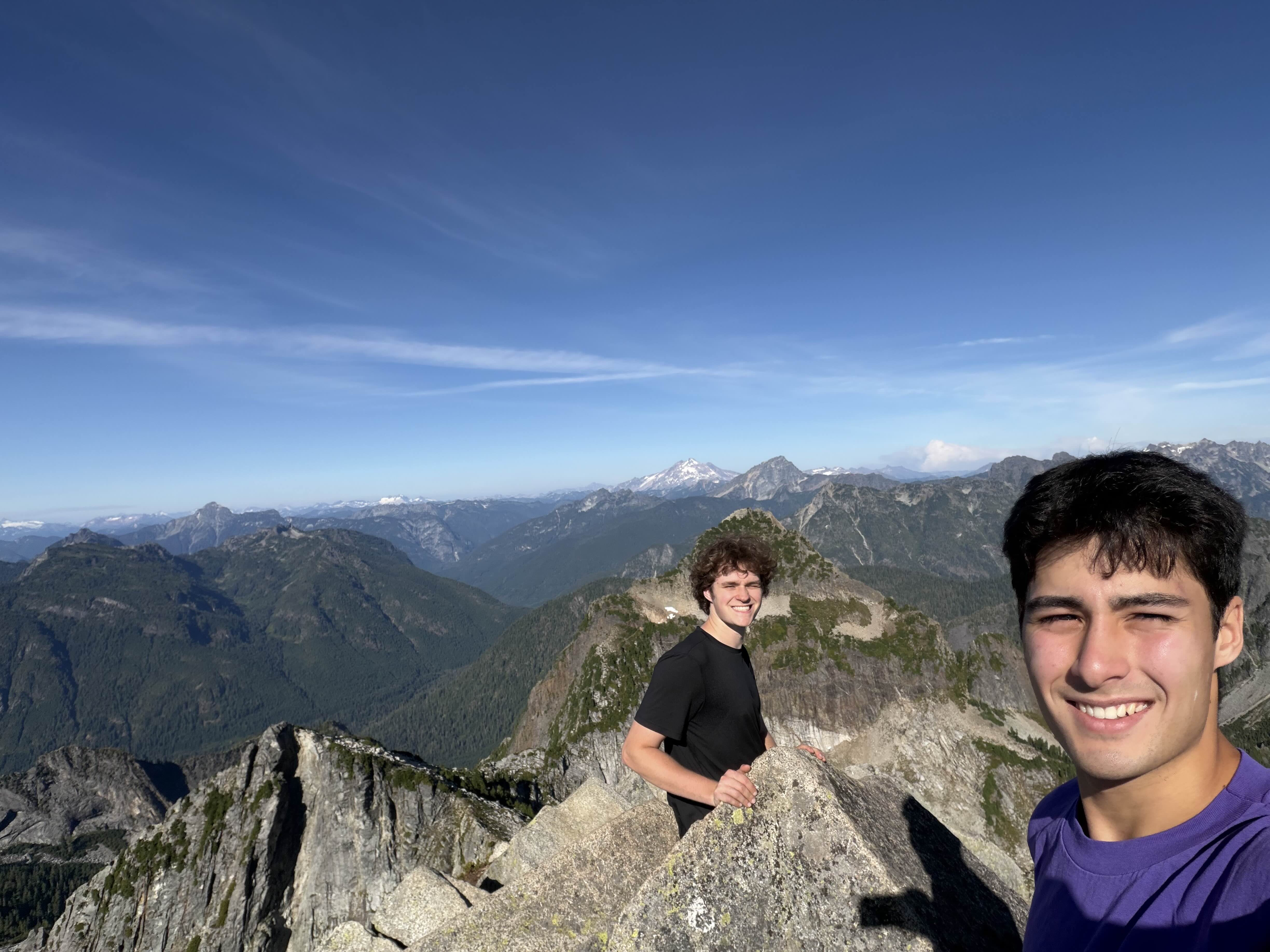
“This summer taught me that scientific progress often occurs through repeated failures, experimental optimization, and persisting for multiple years to advance a major research goal,” he said.
To keep the work going during the school year, Michael partnered with Dr. Skruber back at Gonzaga to develop an imaging analysis pipeline for the data he collected in Seattle, a way to carry a UW project home to Spokane.
The experience has not pulled him away from medicine so much as widened the path. “I am still very excited about doing research in the future, and I am considering a pathway toward getting an MD while also learning to conduct clinical trials research,” he said.
His advice for students starting their first research experience is simple: “Try to absorb as much knowledge and skills as you can, ask questions, and choose an area of research that excites you.”