
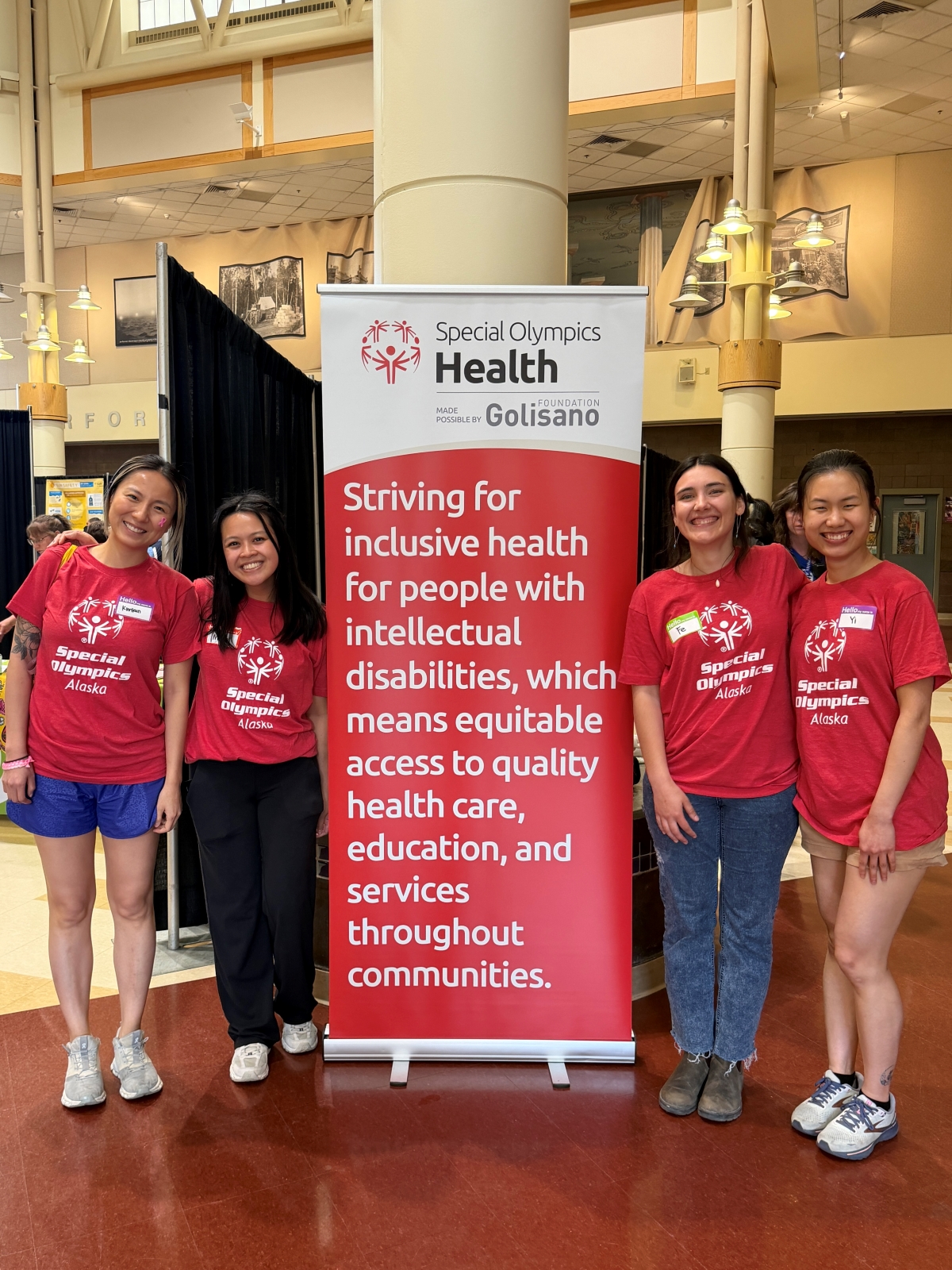
 For first-year Alaska WWAMI students Kunkun Wang and Nickolas McVay, a new partnership with Special Olympics Alaska has created opportunities to serve athletes with intellectual and developmental disabilities while developing skills they will carry into their future careers as physicians.
The initiative began when Special Olympics Alaska reached out to the University of Washington’s Service-Learning Advisory Committee (SLAC) to explore a potential collaboration. As Alaska’s SLAC representative, Wang saw an opportunity to address an important community need while creating a meaningful learning experience for fellow medical students.
“In medical school, we don’t always get a lot of exposure to working with individuals with intellectual and developmental disabilities,” Wang said. “I also learned that for many athletes, Special Olympics health screenings may be their only opportunity to receive preventive health screenings. This opportunity really highlighted a significant community need and an important learning opportunity for students.”
Wang and McVay worked together to pilot and co-found the new SLAC initiative in Alaska, partnering with Special Olympics Alaska’s Healthy Athletes program.
For McVay, the project connected closely with years of prior involvement with Special Olympics. He first became involved in high school through Partners Club and later participated in Camp Shriver through Special Olympics Alaska. His experiences volunteering and working as a care provider for individuals with intellectual and developmental disabilities helped shape his interest in the partnership.
“During my time volunteering with Special Olympics and working as a care provider for people with IDD I learned that many individuals with disabilities struggle to access healthcare due to physical, financial, or behavioral barriers,” McVay said. “When learning about SLAC projects, I immediately knew that a partnership with Special Olympics could be a great opportunity.”
As student leads, Wang and McVay coordinate with Special Olympics Alaska organizers, recruit and train volunteers, and help prepare students to participate in health screening events.
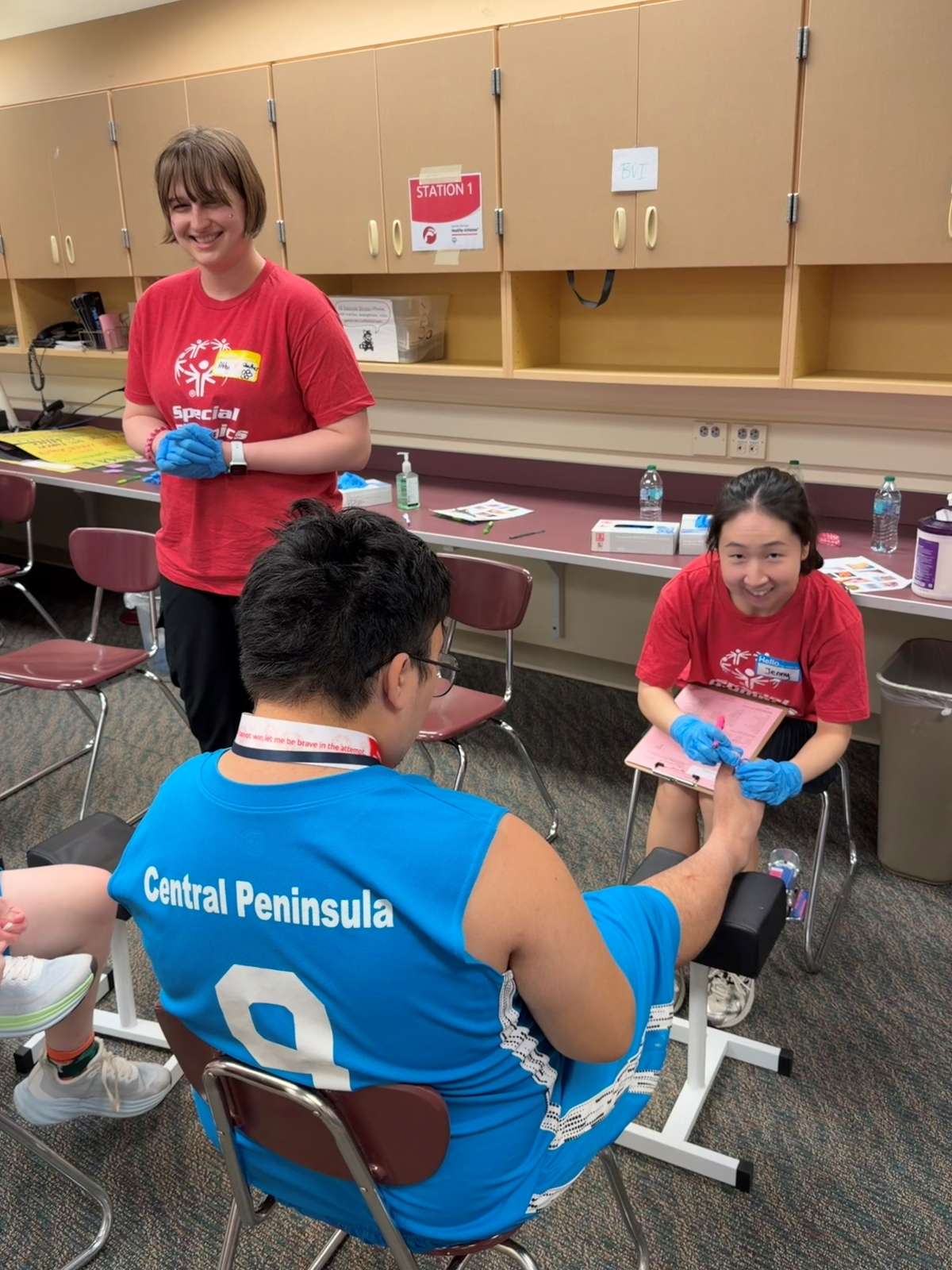
So far, Alaska WWAMI students have participated in two Special Olympics events, supporting athletes at Health Promotion and Fit Feet screening stations. During Health Promotion screenings, students assist with blood pressure measurements, weight assessments, nutrition counseling and health education. At the Fit Feet station, students help assess shoe fit and foot health concerns alongside healthcare professionals.
For both students, the most meaningful part of the experience has been the opportunity to connect directly with athletes.
“I think the most rewarding part has been interacting directly with the athletes,” Wang said. “They are incredibly fun, welcoming, and enthusiastic, and it is always inspiring to see the excitement they bring to the events. It is also meaningful to know that we are helping provide health screenings and education to athletes who may have limited access to routine healthcare, particularly those traveling from rural communities across Alaska.”
The experience has also strengthened both students’ understanding of patient-centered communication and care.
“One thing I really learned was pacing and communication during interactions,” Wang said. “I realized that when I ask a question, it’s important to give athletes enough time to process and respond, instead of jumping in or repeating the question right away. If I repeat it too soon, it can actually interrupt their thinking or slow the interaction down.”
McVay shared a similar lesson.
“I’ve learned the importance of not letting a fast environment push me try to speed up my interaction with the athlete who I am working with,” he said. “Going at the pace of the person you are working with is key to ensuring understanding on both sides. I also learned the importance of not filling in gaps of silence after asking a question. Some folks just need a little longer to process what was asked and how they want to answer.”
Both students say the experience will influence the way they approach patient care throughout their careers.
“I think this experience demonstrates the importance of being a compassionate and patient physician to provide quality care, and my goal is to improve my skills so that when I meet a patient who has different needs or understanding I can adapt to ensure that they still get excellent quality care,” McVay said.
As the partnership continues to grow, Alaska WWAMI students will have additional opportunities to volunteer at Special Olympics Alaska Healthy Athletes events, helping expand access to health screenings while gaining valuable experience caring for individuals with intellectual and developmental disabilities.