
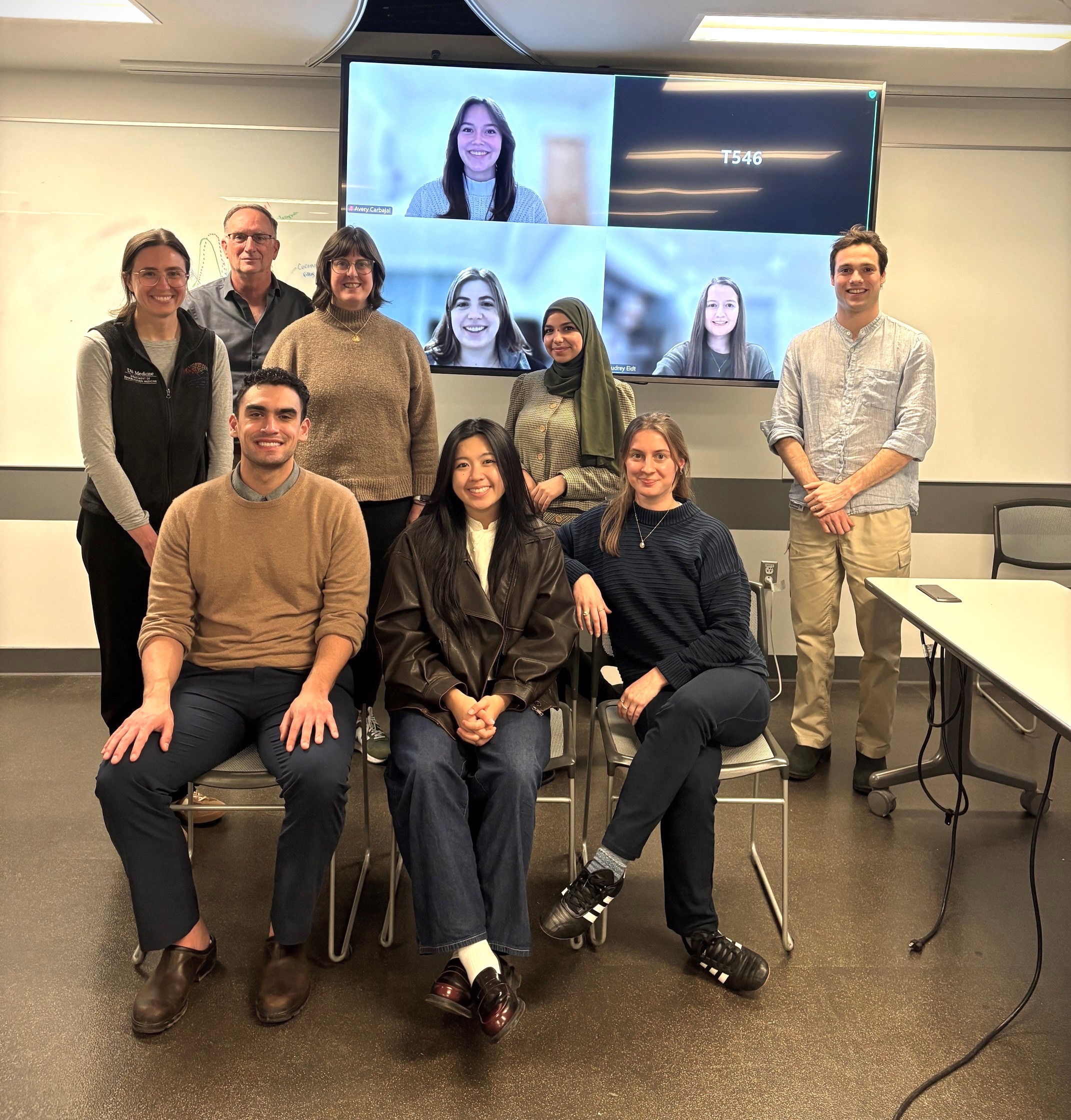
Back (left to right): Alissa Smith, Dr. Mark Tonelli, Dr. Andrea Kalus, Fatima Al-Shimari, Dan Brooks
Zoom: Avery Carbajal (top left), Madison Bergeman (bottom left), Audrey Eidt (bottom right)
In medical school, students spend years learning how to diagnose illness, interpret data and perform increasingly complex clinical tasks. The Humanities & the Arts Pathway at the University of Washington School of Medicine asks students to develop a different set of skills alongside that training: observation, reflection, creativity and comfort with ambiguity.
Founded in 2020, the optional pathway encourages students to explore medicine through literature, visual art, music, storytelling and other humanities disciplines. Across specialized coursework, clinical experiences and creative projects, students engage deeply with the human dimensions of medicine—not only the experiences of patients, but also their own emerging identities as future physicians.
Their exploration takes many forms.
One student transformed the sounds of hospital alarms and hallway noise into an immersive soundscape reflecting the sensory realities of hospitalization. Another used colorful embroidery thread to recreate the brachial plexus while examining the longstanding relationship between artistic practice and anatomical study. A sewn paper collage inspired by Picasso’s “Guernica” reimagined the pediatric emergency department as both chaotic and deeply human.
Other projects turned inward. One student reflected on imposter syndrome and professional identity through a mixed-media recreation of a childhood class photo featuring an oversized white coat. Another compiled sketches and journal entries into a handmade book exploring experiences ranging from the anatomy lab to the emotional weight of learning medicine through the human body. A handmade papercraft anatomy flipbook became the starting point for a reflection on taking an unconventional path into medicine and learning to approach life through “softening, not toughening.”
These projects were presented at the conclusion of an elective course for medical students and health professional graduate students taught by Dr. Andrea Kalus and Dr. Mark Tonelli. Students were invited to use creative work to examine experiences that can be difficult to fully articulate through clinical language alone. The resulting pieces explored grief, chronic illness, communication, institutional power, identity formation and the tension between medicine’s technical demands and its deeply personal realities.
Though the projects vary widely in tone and medium—spanning collage, painting, poetry, embroidery, prose and sound design—many share a common impulse: to slow down and more carefully examine experiences that medical training often requires students to move through quickly.
Several students explored the challenges of communication within medicine, from the difficulty of expressing pain to the sensory overload of the hospital environment. Others turned their attention to more internal experiences, reflecting on their own identity, uncertainty and the emotional realities of becoming physicians. Some projects took a more critical lens, examining grief, institutional power and the ethical tensions embedded within healthcare systems.
Together, the projects demonstrate how the humanities can function not as an escape from medical training, but as another way of engaging with it. In a profession often defined by efficiency, certainty and measurable outcomes, the course created space for reflection, experimentation and emotional honesty.
This gallery of work offers a portrait of students learning not only how to practice medicine, but how to remain attentive to the complicated human experiences at its center.
Explore The Projects:
Madison Bergeman: “Rate Your Pain on a Scale of 1 to Color”
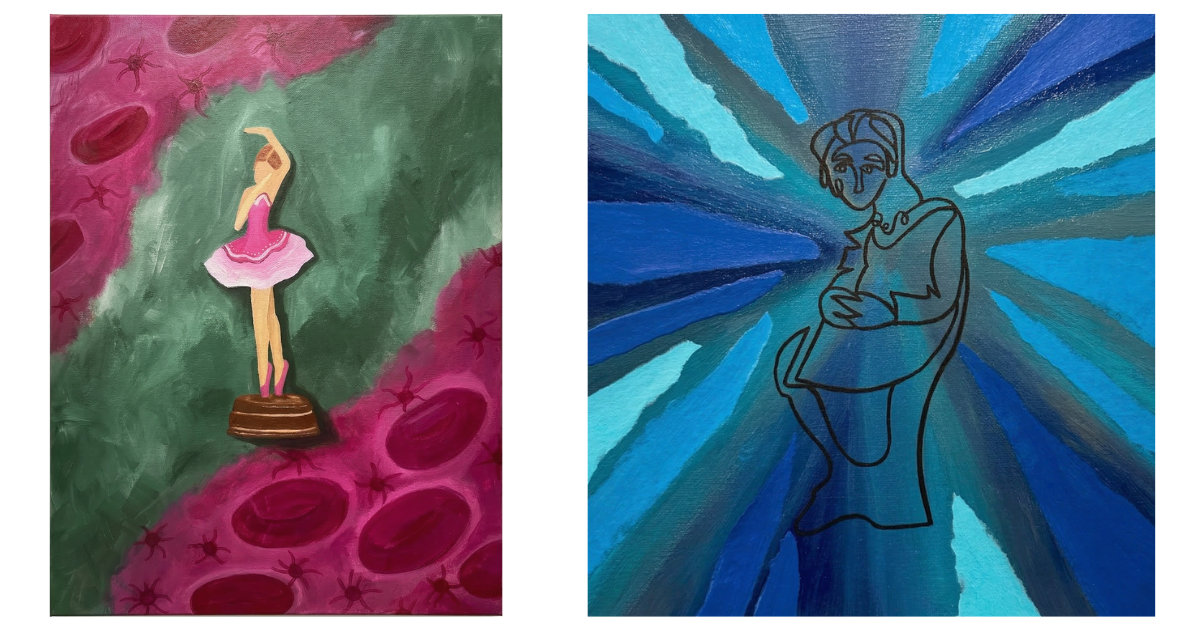
Madison Bergeman’s project challenges one of medicine’s most familiar clinical questions: “Rate your pain on a scale of 1 to 10.”
Through two conceptual paintings, Bergeman explores the limitations of standardized pain scales and the difficulty of communicating suffering when experiences do not fit neatly into language or numbers. One painting was inspired by a patient encounter during clinical training, while the other draws from Bergeman’s own experience living with Idiopathic Thrombocytopenic Purpura (ITP).
Rather than attempting to quantify pain, the paintings use abstraction and color to convey emotional and physical experiences that resist simple explanation. The work asks viewers to reconsider how medicine interprets pain, particularly when patients struggle to clearly articulate what they are feeling.
By shifting pain from numerical assessment to visual expression, Bergeman’s project highlights the tension between medicine’s need for measurable data and the deeply subjective nature of suffering. The pieces also reflect how personal experience can shape the way future physicians understand and communicate with patients living with chronic illness.
Alissa Smith: “CHAT-SCI Soundscapes”

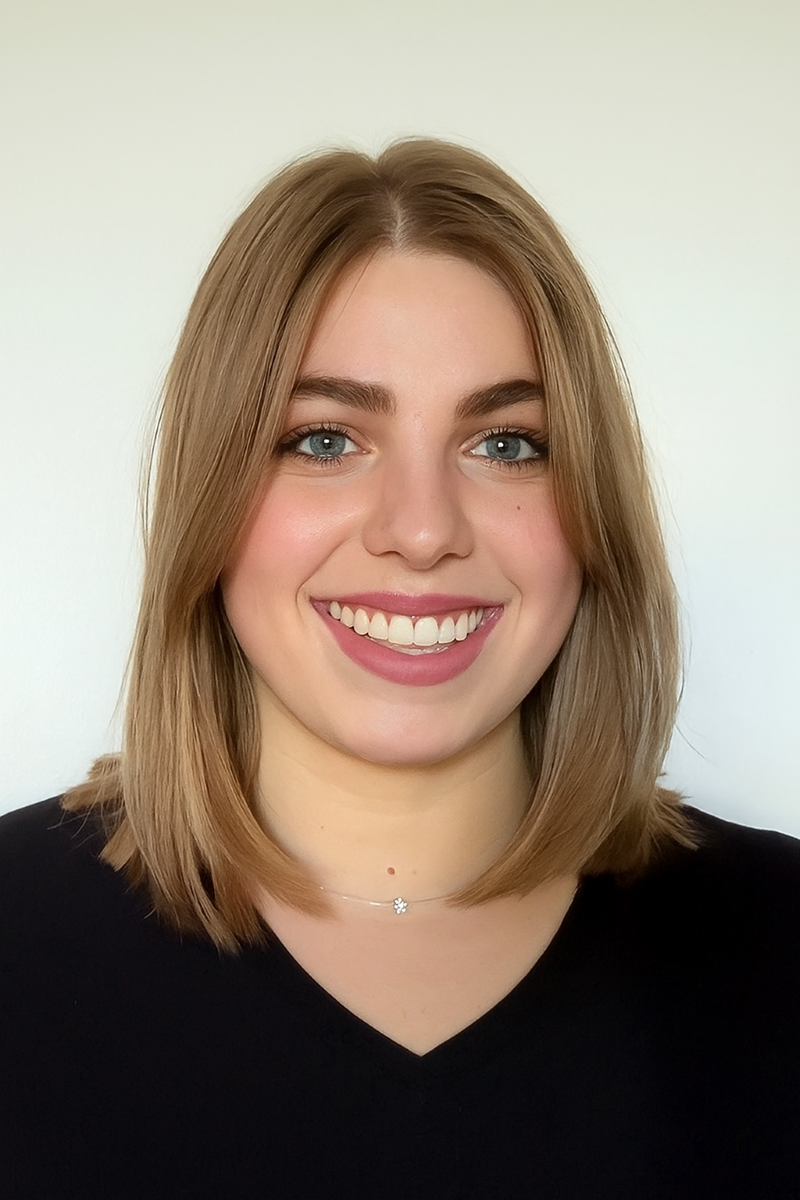
Alissa Smith’s project transforms the sounds of the hospital into an immersive reflection on communication, environment and patient experience.
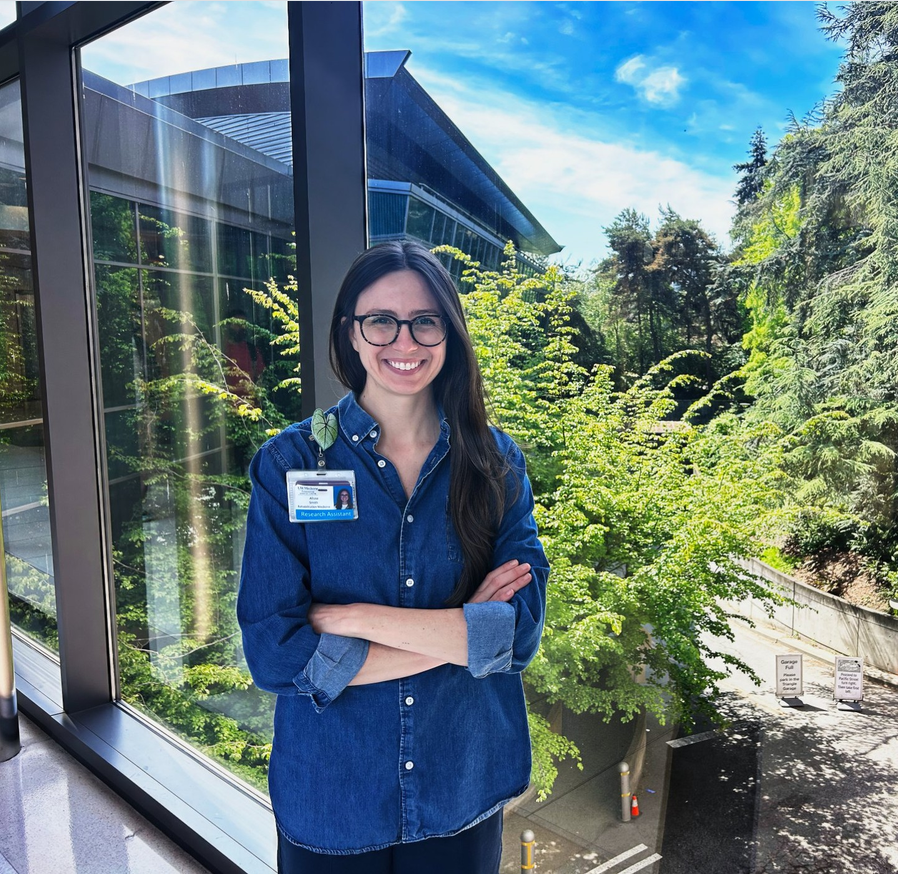
A rehabilitation medicine PhD student with a background in speech therapy, Smith works closely with patients who have experienced traumatic spinal cord injuries, many of whom continue to face significant communication challenges during long hospital stays.
Using isolated or reconstructed environmental audio, Smith created a soundscape built from familiar sounds like ventilator alarms, squeaky hospital bed wheels, hallway noise and overhead pages. The project was informed by conversations with patients about the constant noise of the healthcare environment and the ways it shapes their experience of healing.
For clinicians and staff, many of these sounds eventually fade into the background. For patients, however, they can become an inescapable and exhausting part of daily life.
Smith intentionally crafted the soundscape to convey the overwhelming sensory environment patients often describe during hospitalization, encouraging listeners to reflect on how hospital sound shapes patient experience. The project highlights how sensory experiences—particularly sound—can influence stress, communication and overall wellbeing in healthcare settings.
Dan Brooks: “ED Guernica”
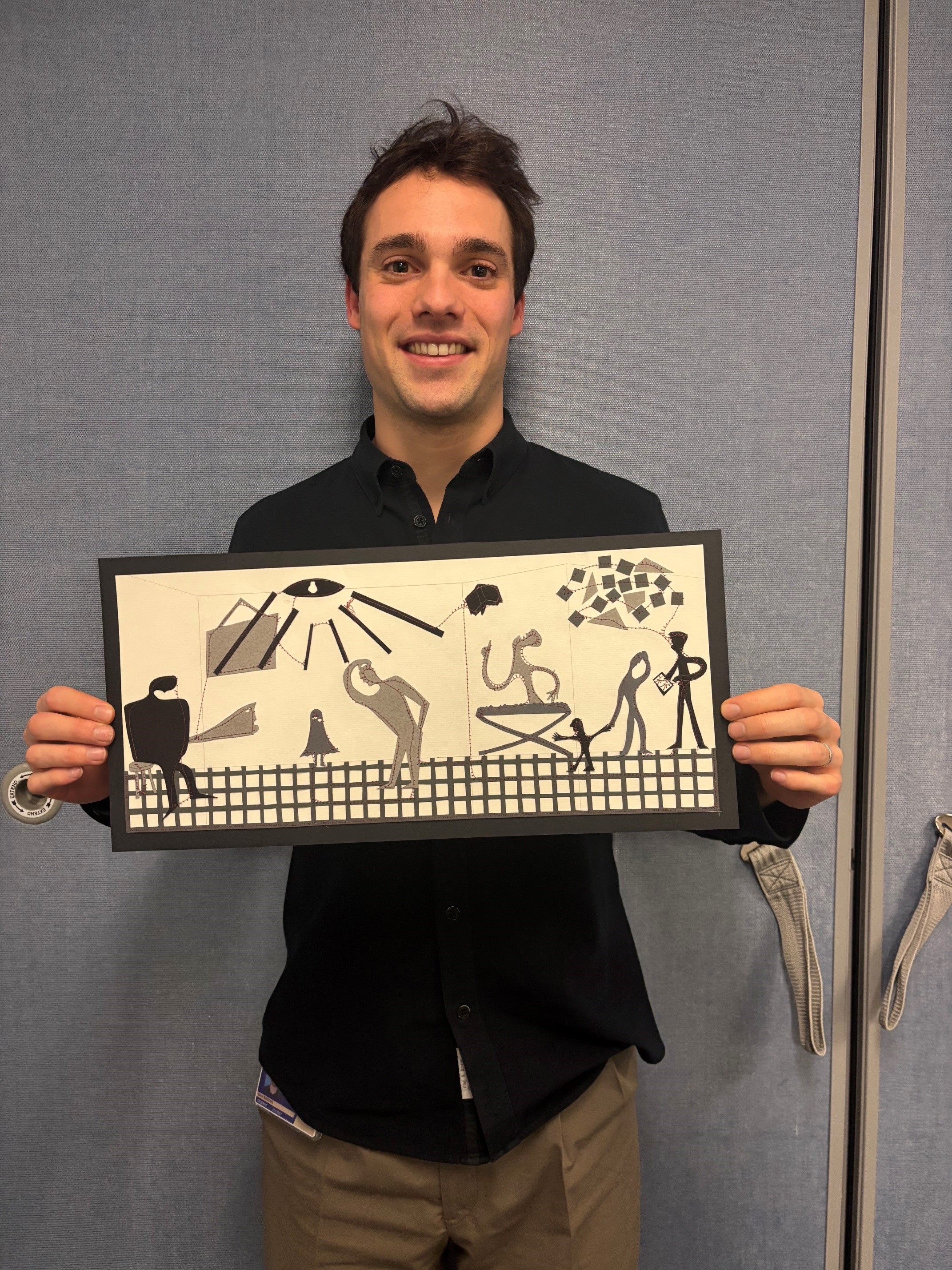
In “ED Guernica,” Dan Brooks reimagines Picasso’s iconic anti-war painting within the setting of a pediatric emergency department.
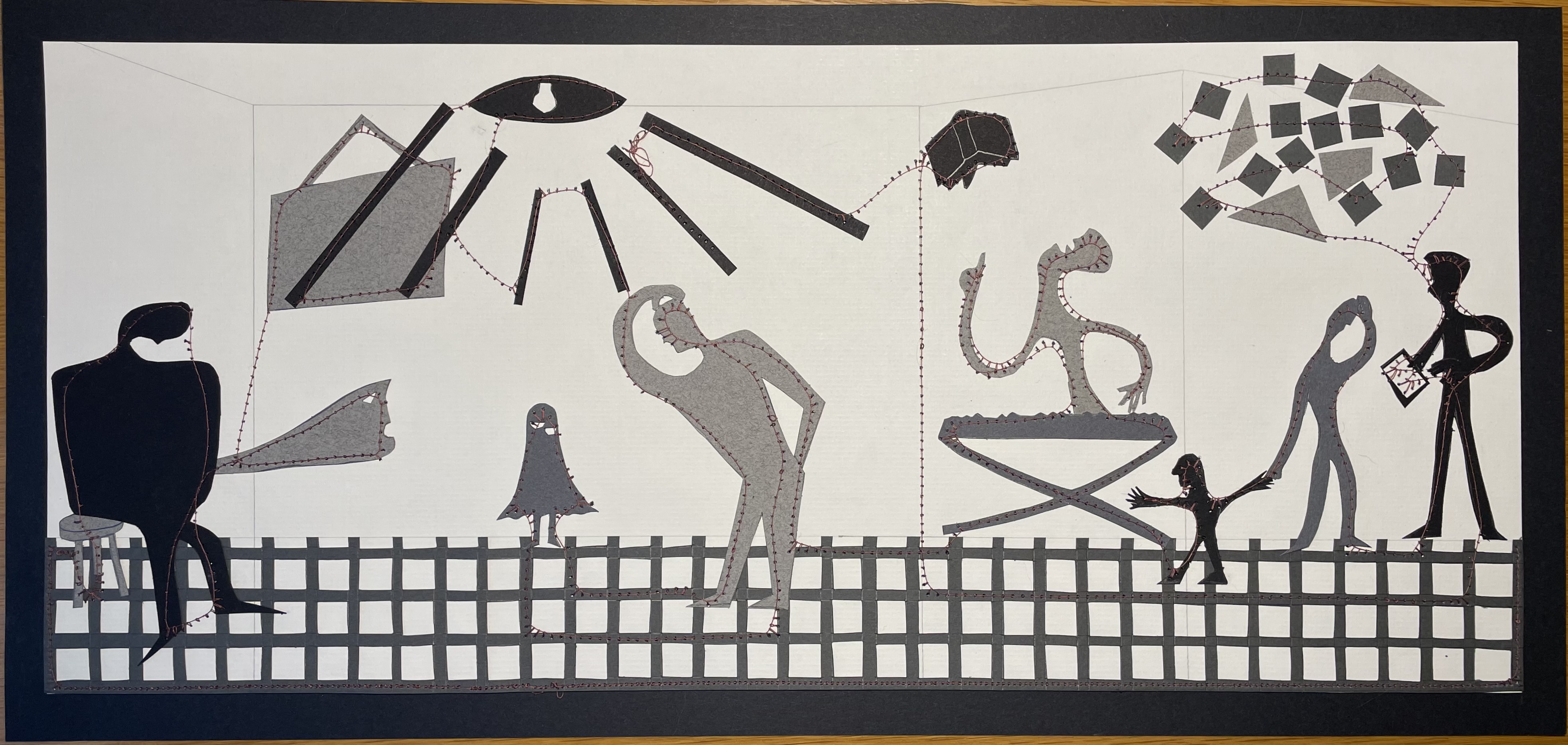
The sewn paper collage depicts the emergency department at Boston Children’s Hospital as crowded, chaotic and emotionally intense. Patients, providers and families overlap in a fragmented visual landscape that mirrors the sensory overload and urgency of emergency medicine. Small children hide in plain sight, and difficult news from a physician delivered to a parent and child comes out sharp and jagged.
At the same time, Brooks intentionally includes moments of warmth and humanity within the disorder. One scene within the collage features a teenage patient playing a keyboard, creating a point of joyful contrast amid the surrounding chaos.
The project explores the tension between healthcare environments designed for efficiency and the emotional realities of healing within them. While emergency departments are places of urgent care and lifesaving intervention, they can also feel overwhelming and inhospitable for patients, families and providers alike.
By drawing on the visual language of “Guernica,” Brooks frames the emergency department not only as a clinical space, but as an emotionally charged environment shaped by fear, uncertainty, exhaustion and resilience.
Audrey Eidt: “Interconnections Between Visual Arts and Medicine”
Audrey Eidt’s project uses embroidery, anatomy and art history to explore the longstanding relationship between medicine and visual art.
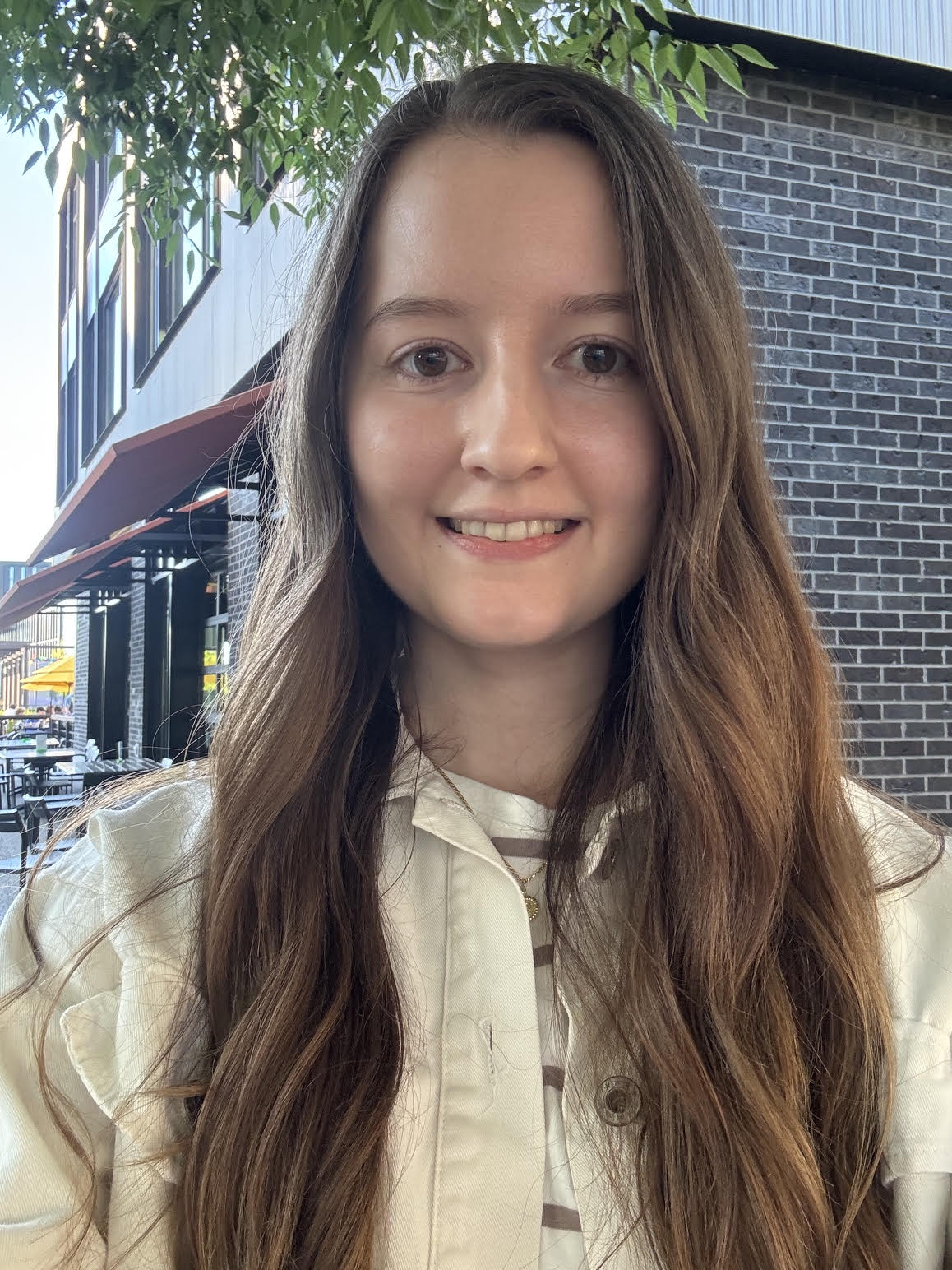
At the center of the project is a recreation of the brachial plexus made from colorful embroidery thread constructed entirely from two-handed surgical knots. The intricate work reflects both the complexity of human anatomy and the precision required in artistic practice.
Eidt’s accompanying presentation traced historical connections between medicine and art, including Leonardo da Vinci’s anatomical dissections and the role visual representation has long played in medical education. She also explored how art can help physicians strengthen observational skills and visual literacy, from noticing posture and facial expressions, to interpreting subtle visual cues that may signal underlying illness.
The project additionally highlights how creative practices can reinforce the physical skills used in medicine. Activities such as sewing and embroidery require patience, dexterity and fine motor control, qualities that closely parallel procedural and surgical skills.
Through both research and craftsmanship, Eidt’s work argues that art and medicine are not separate disciplines, but deeply interconnected ways of observing, interpreting and understanding the human body.
Fatima Al-Shimari: “Medical Grade: Confessions of an Almost Doctor”
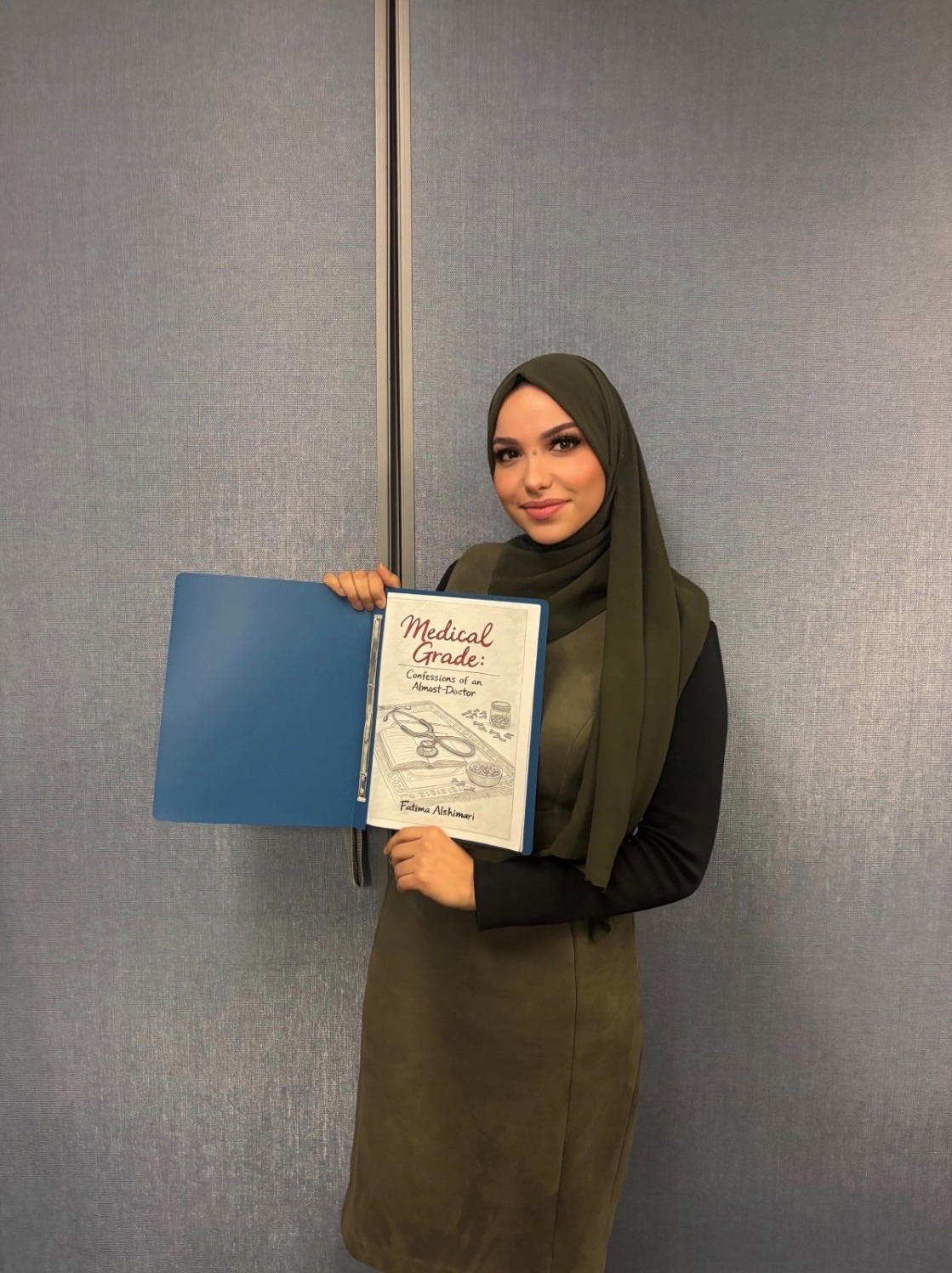
Fatima Al-Shimari’s handmade book combines journal entries, sketches and reflections created throughout medical school into an intimate exploration of medicine, identity and human connection.
One of the project’s reflective pieces focuses on her first experience in the anatomy lab.
“Skin is both barrier and invitation,” she wrote. “A place where illness reveals itself. A map of immune response and emotion. Skin doesn’t lie.”
She later reflects on “the sacredness of it. The humility. The profound privilege to learn not just from a book but from a human body entrusted to us.” Al-Shimari considers the symbolic and emotional significance of skin, not only as an organ studied clinically, but as a site of identity, vulnerability and expression.
Another entry reflects on a clinical simulation experience that prompted her to think differently about her own father’s journey through chemotherapy. He once told her, “Be the kind of doctor I would have wanted.” She notes that he did not mean brilliance or technical mastery, but kindness. “I began to bring myself more into the room. My faith, my stories, my silence.”
Through these layered entries, “Medical Grade” traces how clinical training, memory and personal identity continually intersect, shaping not just how students learn medicine, but how they imagine the kind of physicians they hope to become.
Gillian Soo: “In Formation”
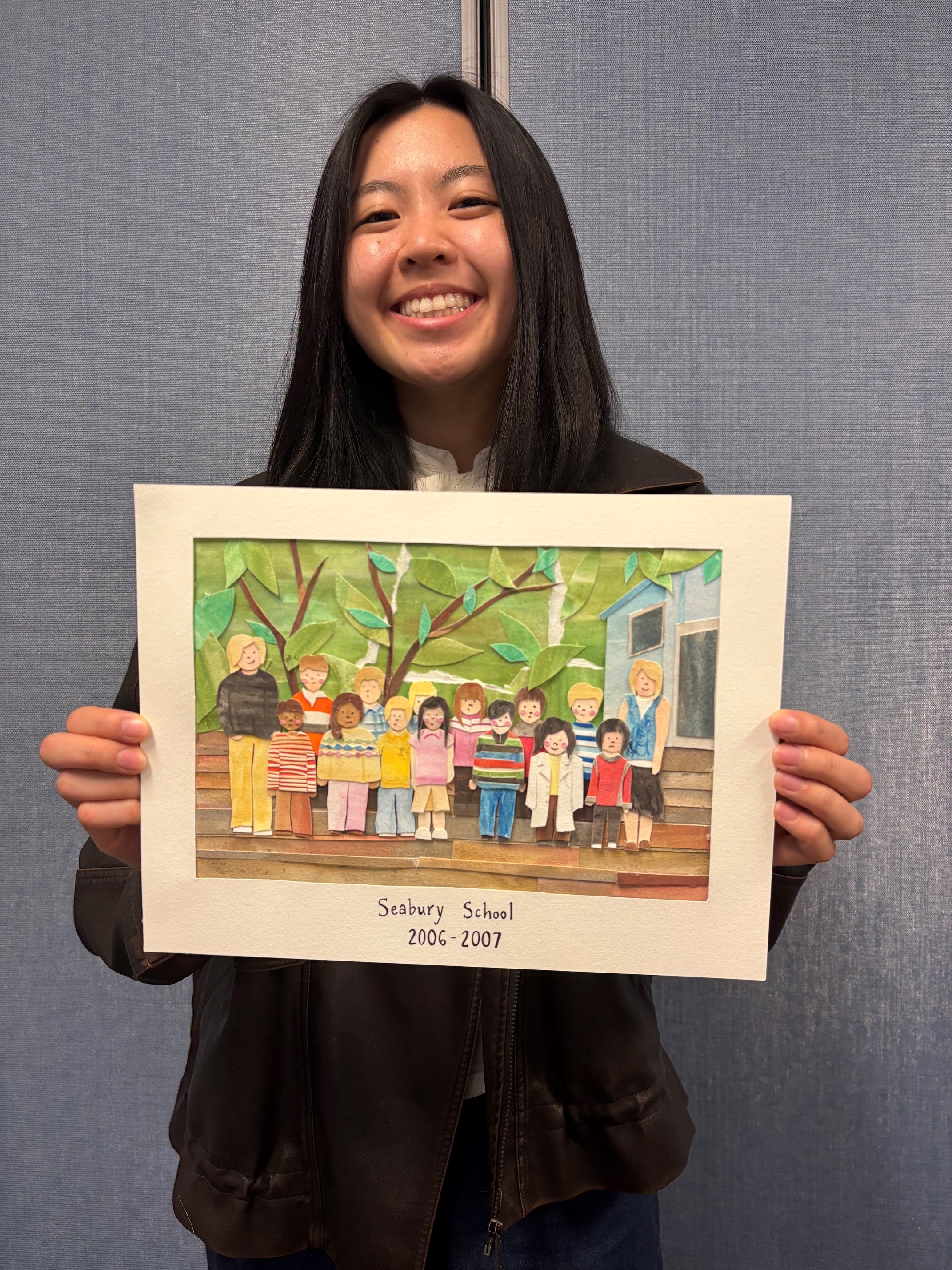
Gillian Soo’s mixed-media project reflects on professional identity formation and the uneasy transition from “playing doctor” to becoming one.
The piece recreates a childhood kindergarten class photo using collage, ink and watercolor. In the image, a young Soo wears an oversized white coat, serving as a visual metaphor connecting childhood imagination with her present experience as a medical student.
The coat, she explains, still does not always quite feel like it fits.
“I don’t want to be perceived through the lens of my job at all times,” Soo stated in an accompanying presentation examining the tension between personal identity and professional expectations.
The project explores imposter syndrome, self-perception and the pressure many medical students feel to fully inhabit the role of physician before they are ready. By combining childhood imagery with present-day anxieties, Soo highlights the complicated process of professional identity formation within medicine.
The work ultimately asks how students can grow into the role of physician without losing sight of the parts of themselves that existed long before medicine entered the picture.
Kalani Silvers: “A Polyphonic Menippean Satire Cycle in Macabre Verse”
Kalani Silvers’ project uses poetry and satire to examine corruption, abuse and power within medicine.
Structured as a deliberately disorienting series of interconnected verses, the work follows the voice of a near-comically corrupt physician who obscures his own wrongdoing through deflection, contradiction and denial. The text is intentionally difficult to navigate visually, requiring readers to slow down and work through a fragmented narrative and competing claims from the speaker.
While the poem begins with exaggerated absurdity, it gradually becomes more grounded in recognizable institutional dynamics and ethical failures within healthcare systems.
Silvers described the work as an exploration of how money, status and professional power can be used to protect harmful behavior and silence accountability.
By combining dark humor with increasingly serious subject matter, the project critiques systems that allow misconduct to persist while also reflecting broader anxieties about hierarchy, authority and moral compromise within medicine.
The result is both literary experiment and institutional critique, using form itself to mirror confusion, obfuscation and ethical disorientation.
Avery Carbajal: “What Remains”
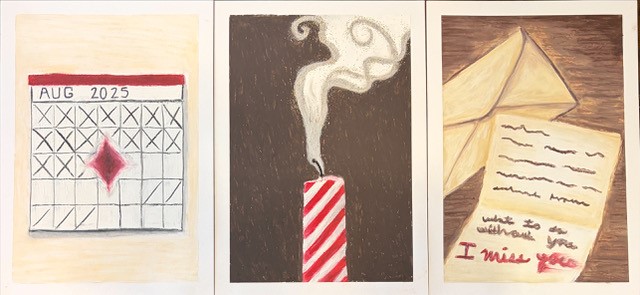
Avery Carbajal’s three-part visual art series explores grief as something ongoing, layered and inseparable from love.
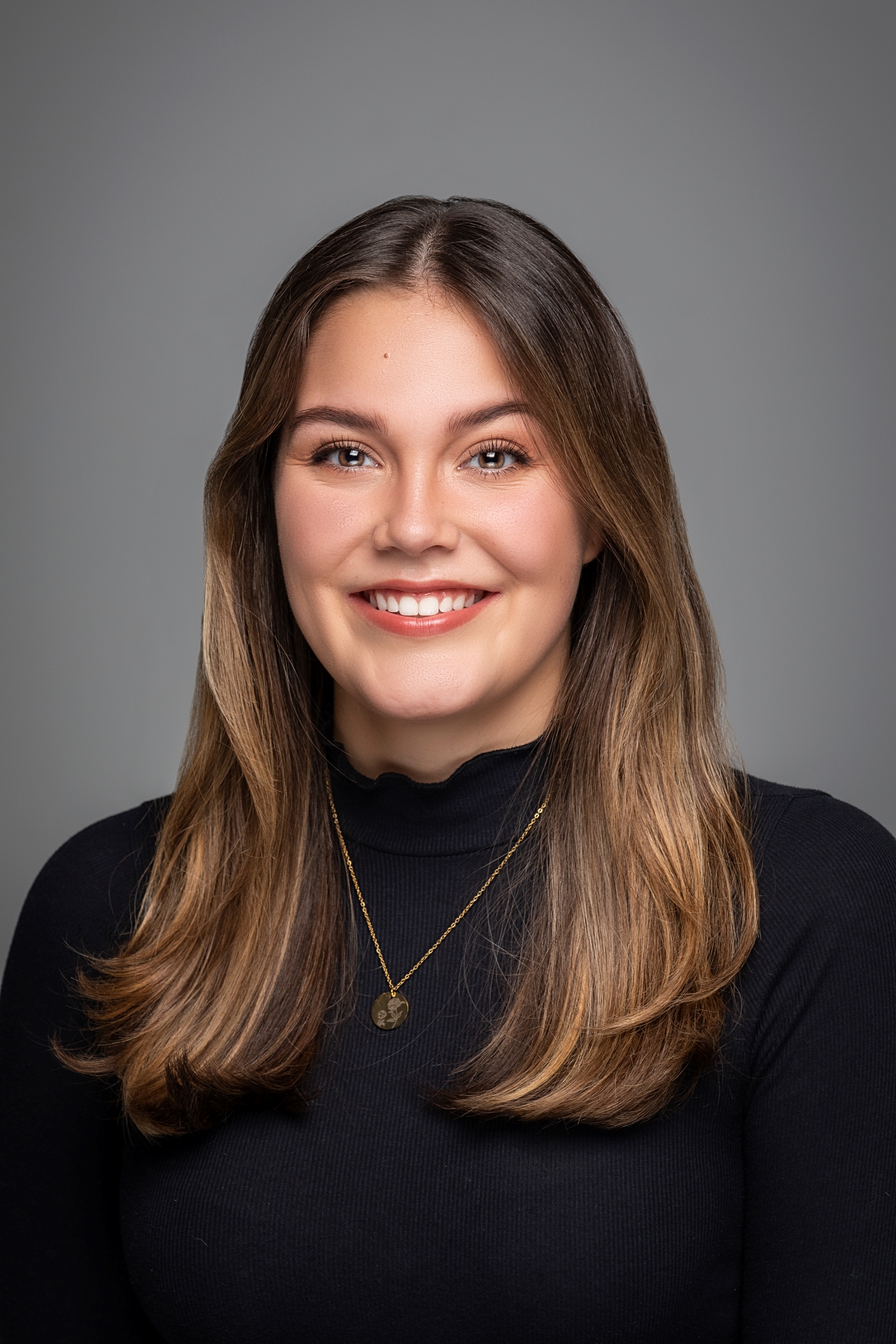
The works—titled “I had a plan,” “My greatest wish” and “All the things I would say”—each approach grief from a different perspective while remaining connected through recurring themes of memory, care and endurance.
Carbajal describes grief in three ways: like a chronic illness, managed but never cured; like glitter in that it is messy, hard to clean up, and you will never get all of it; and like unexpressed love, with all the things people wish they could have said left bottled up.
The series challenges the idea of grief as a temporary emotional state with a clear endpoint. Instead, the works present grief as something that changes form over time while remaining deeply intertwined with relationships and human connection, with mourning persisting because attachment and care persist as well.
Through visual art and metaphor, Carbajal’s project considers how medicine encounters grief not only at moments of loss, but throughout the long and ongoing processes of illness, caregiving and remembrance.
Mikaela Brandt-Fontaine: “There Is No This Without That” (aka “What’s the Plan, Girl?”)
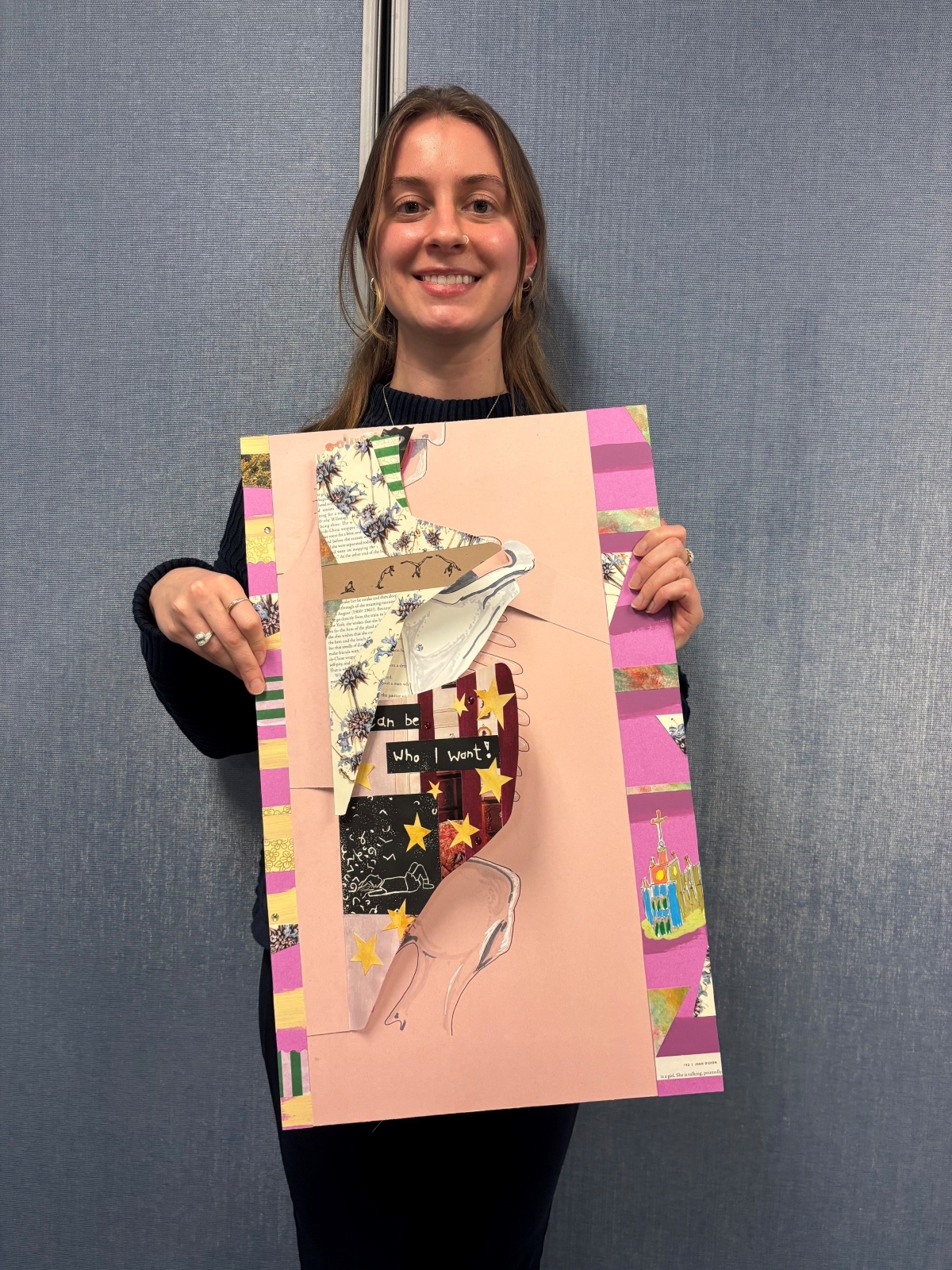
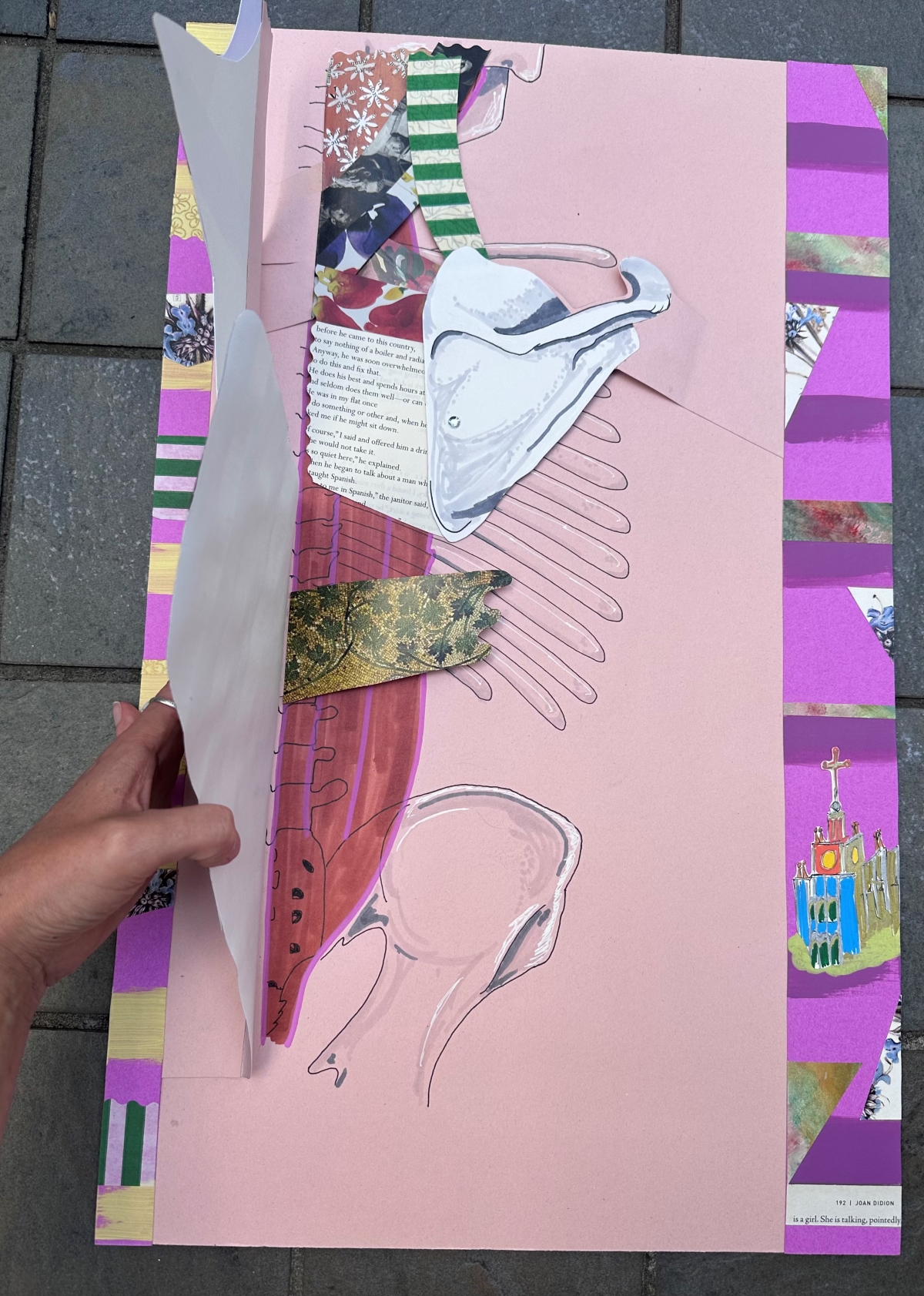
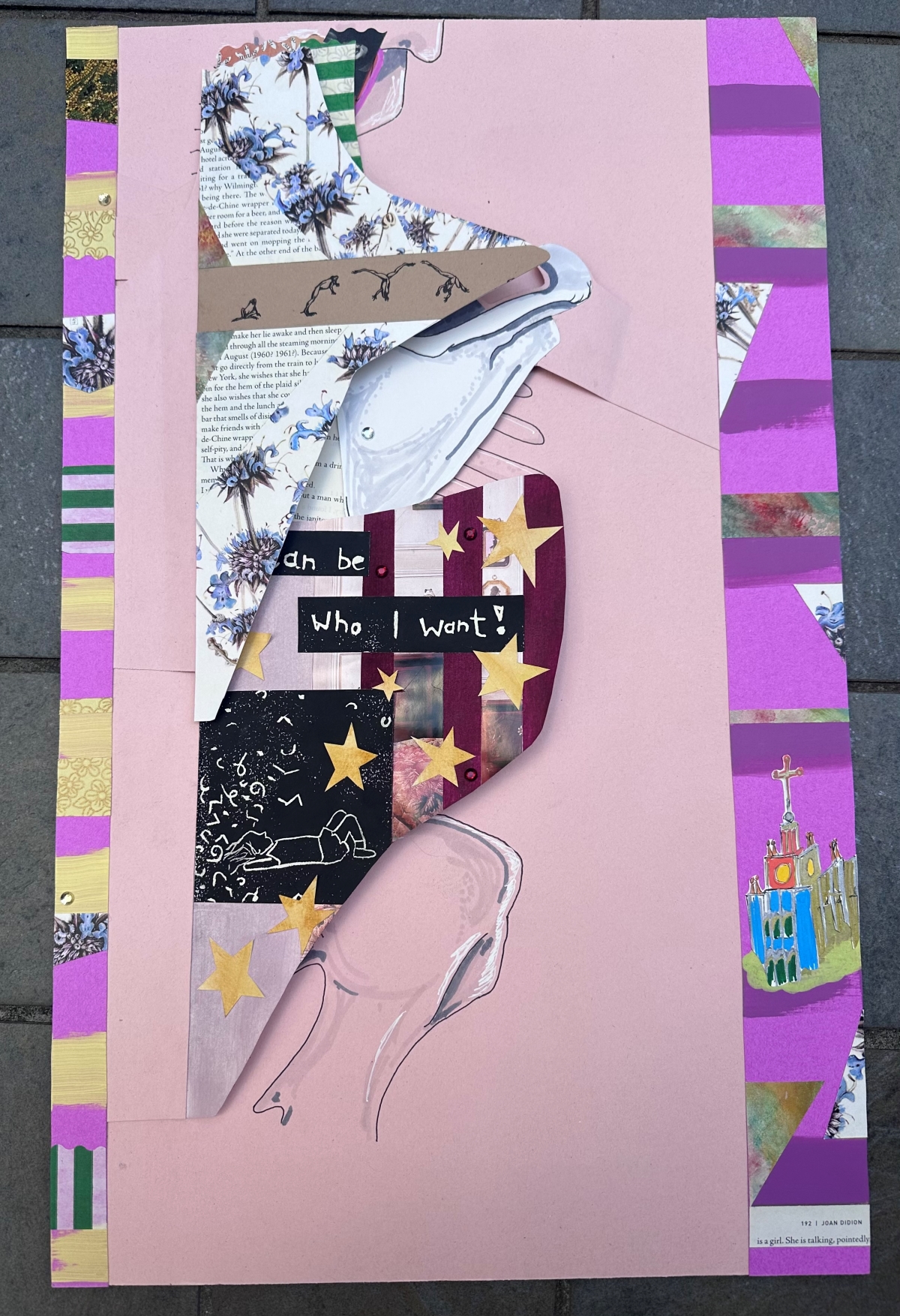 Mikaela Brandt-Fontaine’s project began as a handmade papercraft flipbook created to study muscles during the MBJS block. It eventually evolved into a reflection on creativity, her passion for making, self-discovery and the unconventional path that led her to medicine.
Brandt-Fontaine shares that she did not finish college on her original timeline and instead spent several years moving between jobs and creative pursuits before eventually returning to complete her degree and attend medical school.
During that period, she explored woodworking, furniture restoration, floral art, cooking, gardening and drawing. These experiences shaped both her perspective and her relationship with learning.
 Rather than viewing those years as time lost, Brandt-Fontaine describes them as foundational to the person and future physician she became. Learning to work patiently with her hands, start imperfectly and improve through practice helped reshape how she approaches medicine today.
She refers to that process as “softening, not toughening.”
The project reflects on the value of slowing down, embracing uncertainty and allowing creativity and lived experience to inform medical training rather than exist outside of it.