
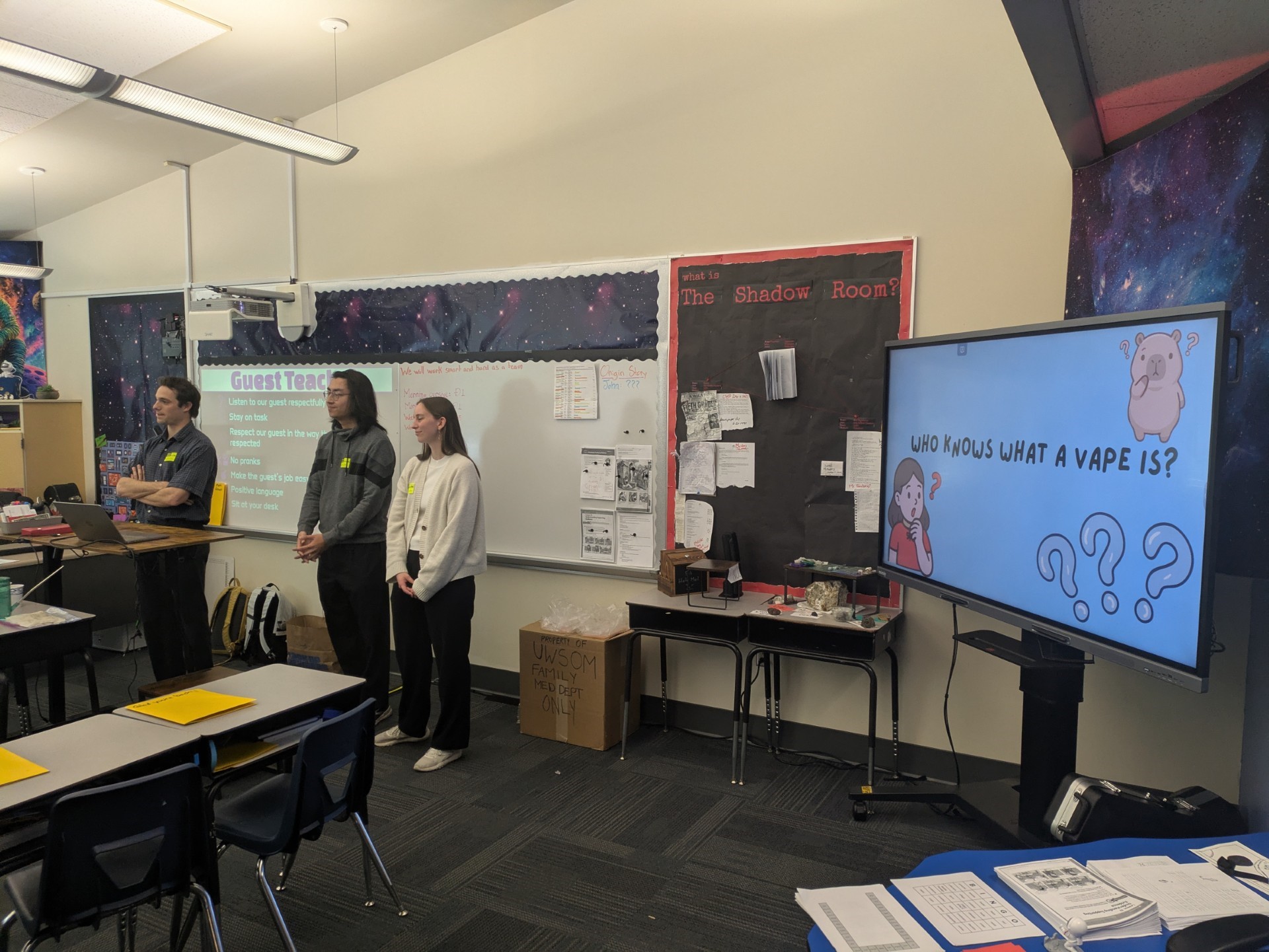
 A group of first-year UW School of Medicine students recently spent a day helping fifth graders in the Tukwila School District learn about the health risks of vaping and smoking through the Clear the Air curriculum, an interactive program that blends science education with conversations about peer pressure, mental health and healthy coping strategies.
Led by four Family Medicine Interest Group (FMIG) student leaders from the Seattle campus—Hannah Williams, KJ Moon, Noah Pham and Dan Brooks—the session encouraged students to think critically about how nicotine and tobacco products affect the body while also exploring the social influences that can shape health decisions.
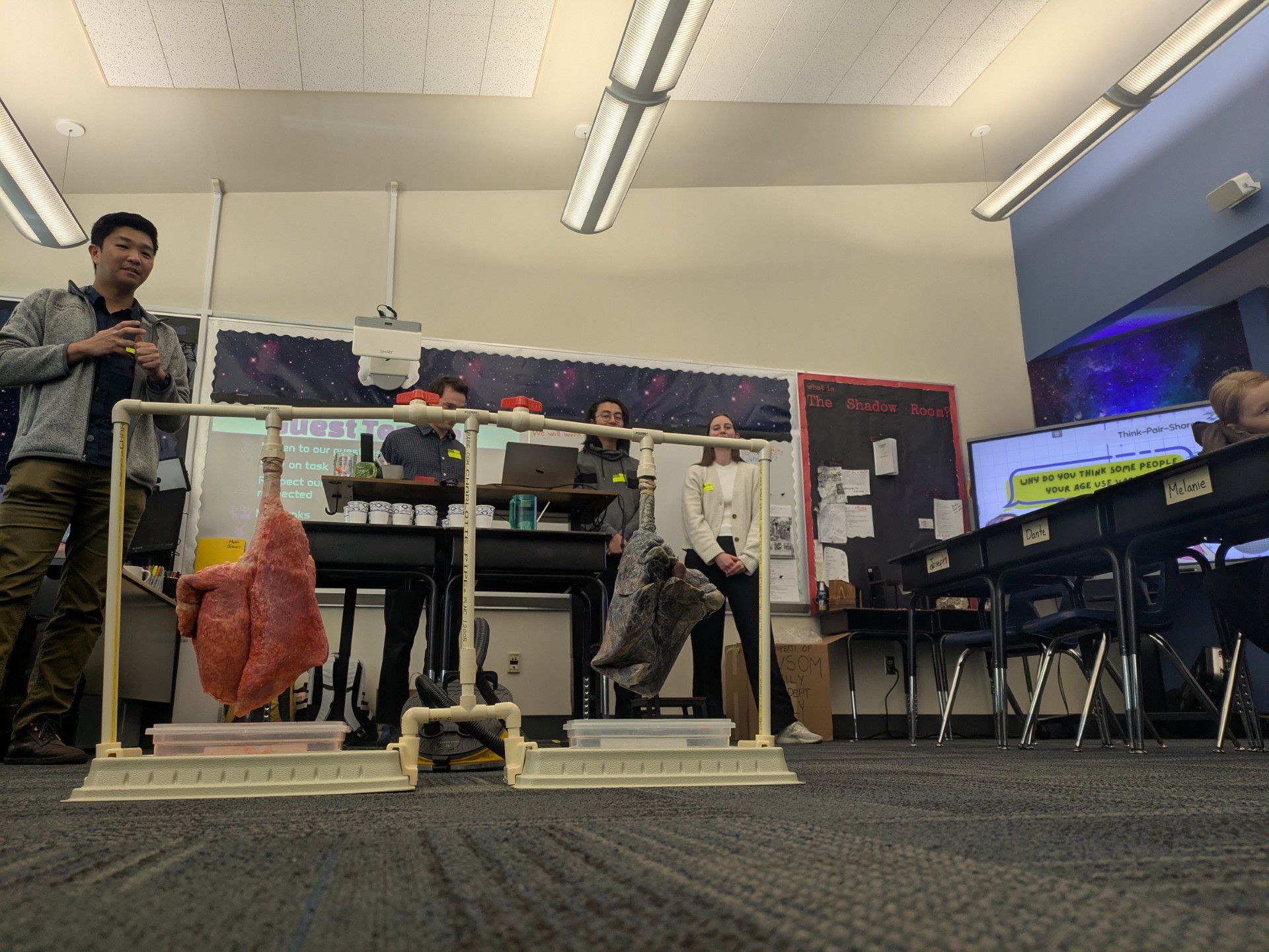
One highlight was an inflatable model comparing healthy lungs with smoker’s lungs, giving students a visual and memorable way to understand the physical consequences of tobacco use. The presenters also incorporated a seed-planting activity, allowing students to take home a living reminder of the lessons they learned about caring for their health and well-being.
“I felt we were able to navigate a conversation around smoking and vaping that helped the students understand that using nicotine products is harmful to their health without stigmatizing addiction and the people who use nicotine products,” said medical student leader Hannah Williams.
The fifth graders’ curiosity quickly became a driving force behind the session. Rather than sticking rigidly to prepared material, the medical students adapted to students’ questions and interests, creating an open dialogue about health and decision-making. A teacher who observed the presentation praised their approach, noting, “You let the presentation breathe and take on its own life with the students. That’s really important and you all nailed it.”
The teacher also highlighted the value of the curriculum’s broad perspective on prevention education. “I think the scientific, social and mental health aspects are VERY important and often missed in this type of presentation,” they said.
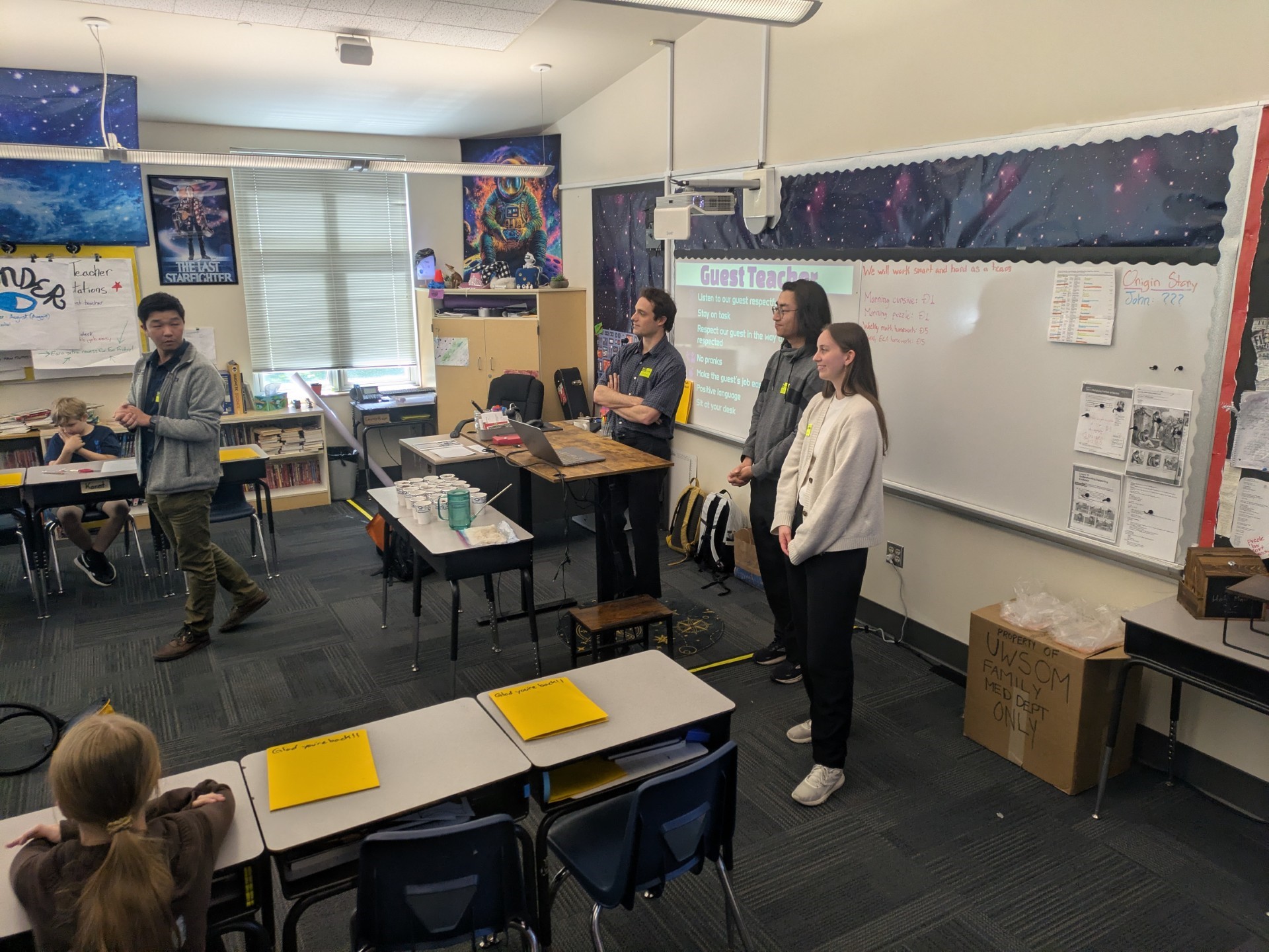 Williams also noted how early children can start developing perceptions around nicotine use and mental health. “When discussing mental health with the students, many of them brought up suicide and using drugs as a means to cope. These students are only 10 years old and are already beginning to form ideas around how to cope with stress.”
Throughout the session, the medical students worked to make complex topics understandable and engaging for a younger audience. According to the teacher, “Your language and verbiage was perfect for this grade level. I noticed that if you said a ‘big word’ you also had an age-level synonym to go with it.”
Perhaps most importantly, the presentation focused on giving students practical tools for navigating future challenges. Discussions about stress, self-care and healthy coping mechanisms helped connect the topic of vaping prevention to students’ everyday lives, while the seed-planting activity reinforced those lessons in a tangible way.
Williams reflects, “Providing healthy mechanisms for coping with stress such as sports, art, listening to music and spending time with friends in person was an important emphasis of our curriculum rather than using fear tactics to discourage drug use. It was a truly fulfilling experience to get to share knowledge with a room full of intelligent, kindhearted and enthusiastic children.”