
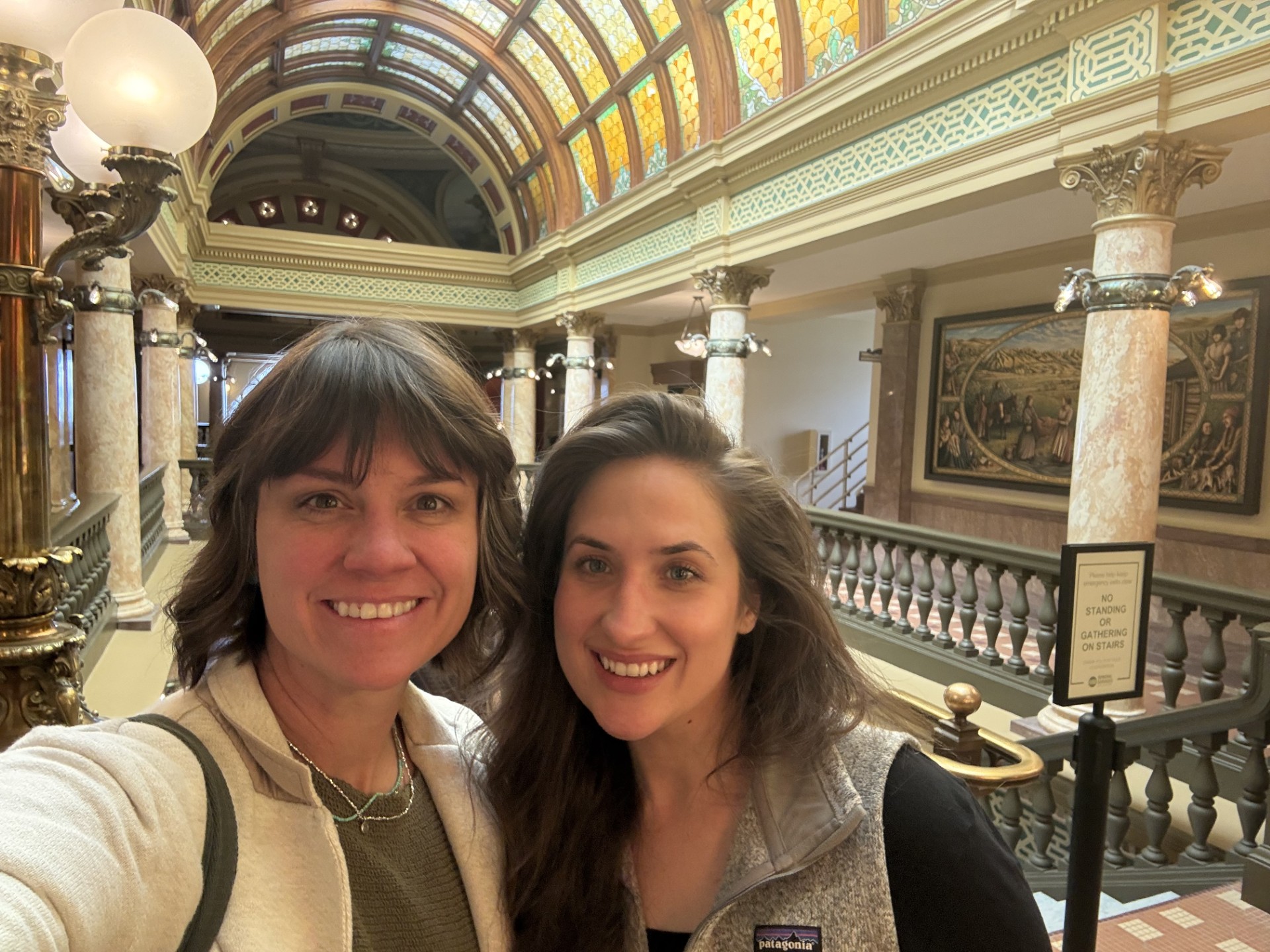
As Montana lawmakers continue studying possible restrictions on kratom ahead of the 2027 legislative session, Montana WWAMI faculty member Dr. Madeline Turner recently shared a physician’s perspective with a legislative committee helping shape future policy discussions. E25 Montana WWAMI student Mackenzie Bernhardt assisted Turner in preparing key points for the hearing.
Dr. Turner, lead WWAMI preceptor in Helena and the medical director at PureView Health Center, was invited to share her clinical perspective on kratom and its impact on patients. The over-the-counter substance has become the focus of ongoing legislative discussions in Montana.
For Turner, participating in the legislative process is an important extension of patient care.
“As physicians, it is important that we stay engaged in the legislative process because we bring our medical knowledge and perspective on how policy decisions impact the health and well-being of our patients,” Turner said. “We have a responsibility to help ensure that healthcare remains safe, evidence-based, and equitable.”
Although public speaking is outside her comfort zone, Turner said advocating for patients made it worthwhile.
“Public speaking has never been my favorite activity, but I am passionate about giving a voice to patients whose experiences often go unheard,” she said.
Turner noted that she and Bernhardt have cared for patients who were unaware of the potential harms associated with kratom use, making the issue especially important to address.
For Bernhardt, the experience provided a firsthand look at how physicians can influence health beyond the walls of a clinic.
“I had never seen the legislative process up close in that setting before, so it was really interesting to experience it firsthand,” Bernhardt said. “We spend a lot of time in medical school learning how to care for individual patients, but this experience was a great reminder that decisions made at the policy level can have a meaningful impact on the health of entire communities.”
Watching Turner testify expanded Bernhardt’s understanding of a physician’s role in shaping public health.
“Watching Dr. Turner speak about patient experiences and use her expertise to help inform the discussion reinforced the importance of physician advocacy and showed me another way doctors can make a difference for their patients,” Bernhardt said.
As Montana continues exploring future approaches to kratom regulation, Turner and Bernhardt say the experience underscored the value of ensuring patient voices and medical expertise remain part of the conversation.