
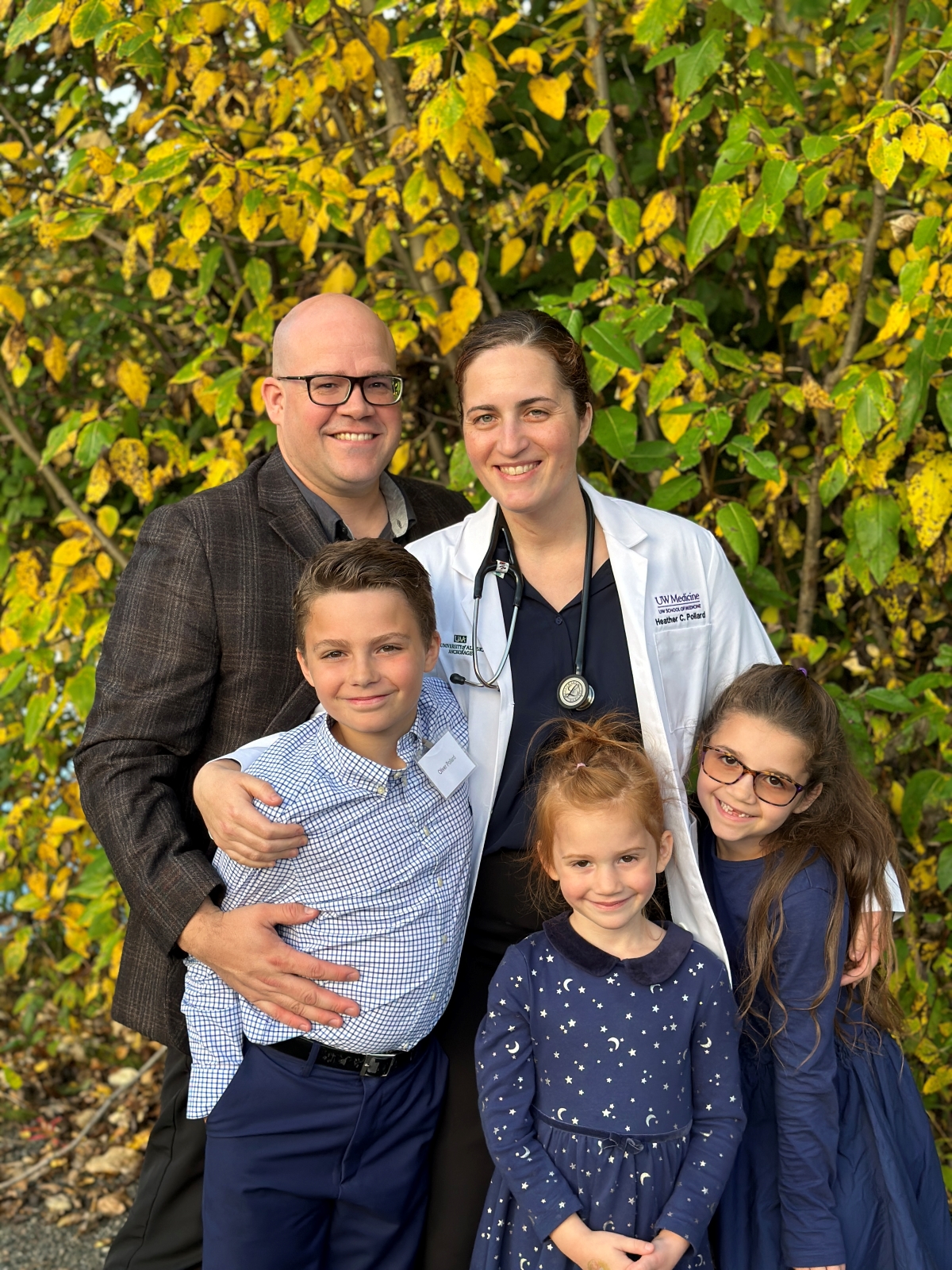
On most mornings, Heather Pollard is awake before the rest of her household, studying in the quiet before the day begins. Soon after, she starts getting her three children ready for school in Anchorage, shifting between her roles as a third-year medical student and a mom.
Pollard’s interest in medicine began early. “I was first drawn to medicine when I was seven years old growing up in a small Alaskan town (on the road system),” she says. “A local man contracted HIV through a lifesaving blood transfusion, and I watched how fear and misunderstanding shaped the community’s response to him.” The moment stayed with her. “I was deeply curious about the disease itself, but I was equally impacted by how medicine intersects with humanity.”
Her path to medical school took shape over time. “I became a physician assistant, got married, had three children and continued working toward becoming a physician,” Pollard says. “It didn’t happen in the straight line I imagined when I was younger, but looking back, every part of that journey has shaped the physician I’m becoming.”
Now in her third year, she is especially interested in Internal Medicine and possibly Med-Peds. “I enjoy caring for medically complex patients, thinking through diagnostic challenges and building strong relationships with patients during vulnerable moments,” she says. She hopes to eventually work as a hospitalist.
When it came time to apply for medical school, Alaska WWAMI felt like a clear fit. “Alaska is home,” she says. “I’ve seen firsthand how geography, weather and provider shortages can make accessing healthcare difficult.” The program’s focus on rural and underserved communities matched both her experience and her goals.
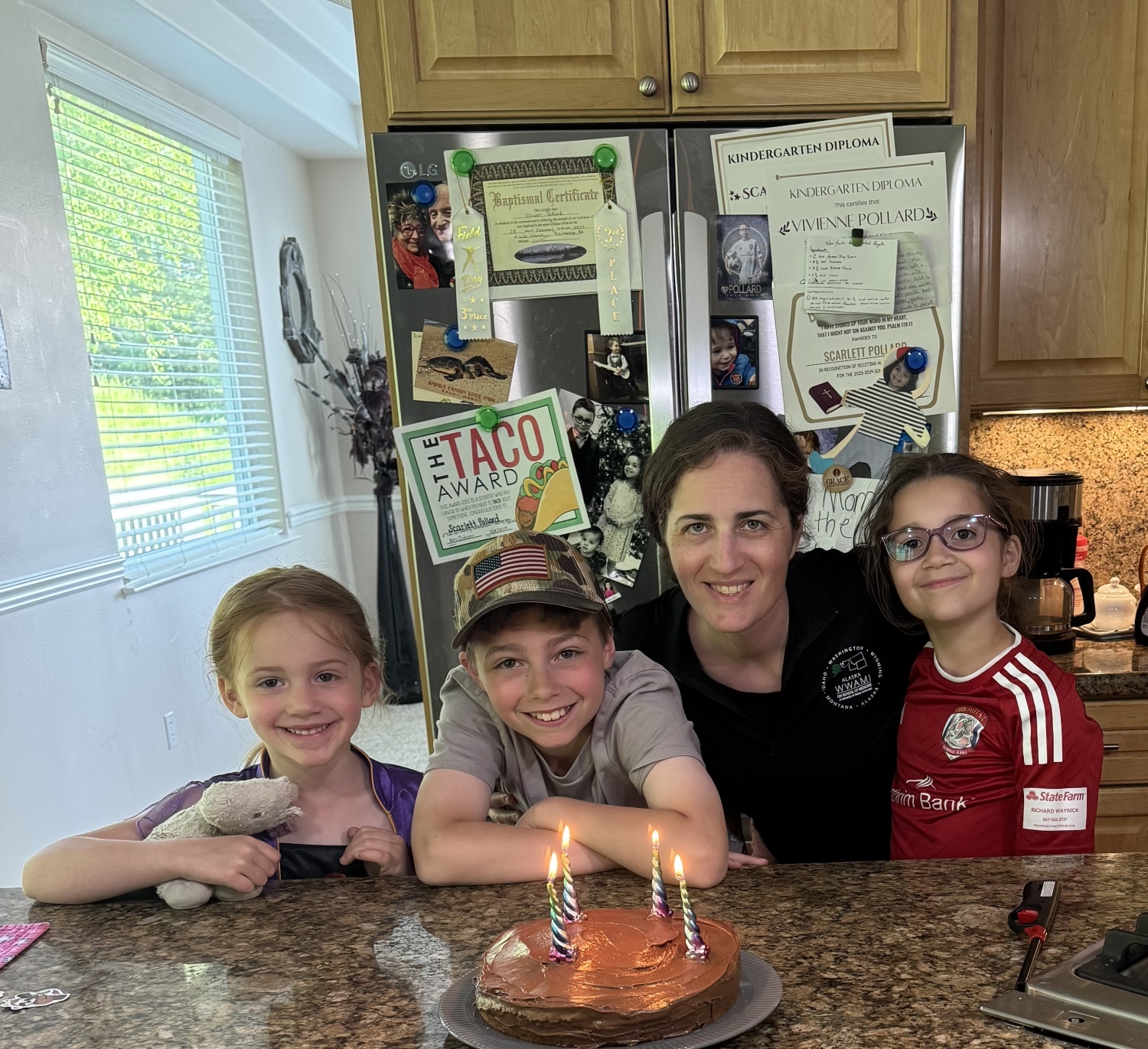
Balancing medical school and motherhood, however, requires constant coordination. “It truly takes a village,” she says, pointing to the support of her husband, her mother and even out-of-town relatives who occasionally travel in to help. “We rely heavily on a shared calendar to keep track of all the moving pieces.”
Her study schedule reflects that reality. “My studying happens early in the morning, late at night or in the small pockets of time between life’s everyday demands,” she says. “Some days feel very structured, but most days feel like controlled chaos—and we’ve learned to be flexible.”
That experience has changed how she thinks about balance. “Medical school has taught me that balance doesn’t always mean doing everything perfectly,” Pollard says. “Sometimes it simply means being fully present with whichever role needs me most in that moment.”
There are challenges, particularly when responsibilities collide. “The hardest part has been accepting that I can’t do everything at the level I would ideally like to all at once,” she says. When her children are sick, the tension becomes especially real. “Sometimes that means attending class virtually while caring for them at home,” she explains. “And when that isn’t possible, my mom often steps in.”
Parenthood has also shaped how Pollard approaches patient care. “Parenthood has made me much more aware of everything patients are balancing outside of the exam room,” she notes. “Childcare, transportation, finances, exhaustion and the invisible responsibilities many patients carry while trying to tend to their health.” It has also kept her perspective in check. “No matter how stressful school feels, I still come home to homework help, bedtime routines and little voices asking me to be present.”
Her children are part of the experience in other ways too. “They celebrate with me when I pass exams like Step, they give me grace when my patience is thin after a stressful day, and they’re often the first to tell me when I need to step away and take a breath,” she says.
As Mother’s Day approaches, her ideal celebration is simple. “Sleeping in a little, sipping a good coffee with my husband and spending quality time with my family,” she says. She adds one more hope with a bit of humor: avoiding the family’s near-annual run of gastroenteritis (commonly called the stomach flu). “It would be great to avoid that this year.”
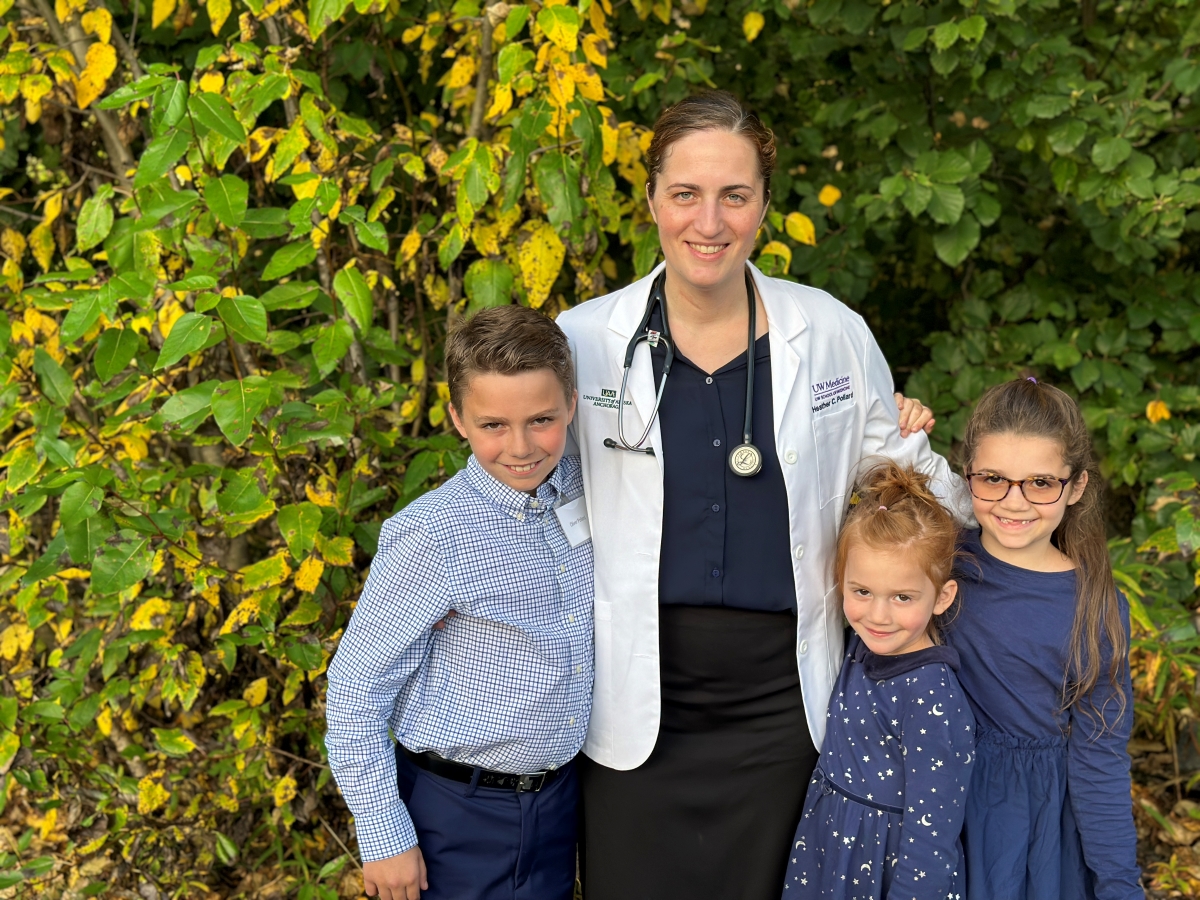 Looking ahead, Pollard’s goals are shaped around being both the best mom and best physician she can be. “I hope to grow into a physician who provides excellent care, continues learning and shows up for patients with compassion and humility,” she says. At the same time, she wants her children to “grow into kind, resilient adults who chase their dreams.”
She was recently nominated by classmates for the Dr. Sharon Tobias WWAMI Award, which recognizes creativity, curiosity, integrity and kindness. “Being nominated by peers who know both my journey in medicine and motherhood meant a great deal to me,” she says.
“I’m proud of the nontraditional path that brought me to medical school and all of the experiences that shaped that journey,” Pollard adds. “I’m especially grateful for the patients who have allowed me to care for them along the way and trusted me during vulnerable moments in their lives.”