
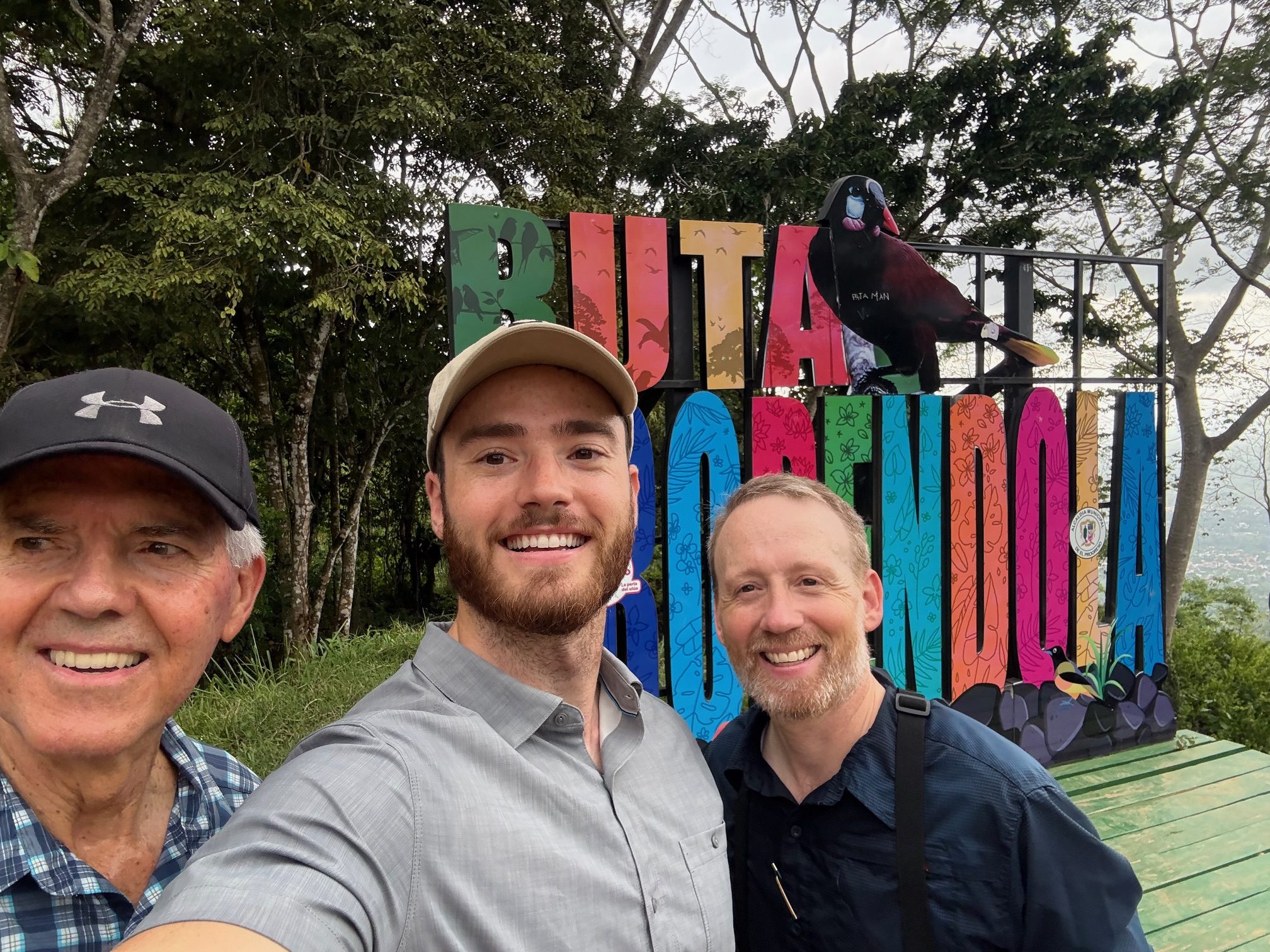
Kaden Moore helped with more than 170 cataract surgeries in Honduras this past August. One patient who still couldn’t see afterward is part of why his glaucoma research at the Moran Eye Center in Utah matters to him.
The mornings after surgery are what Kaden Moore remembers most. Many of the patients had been effectively blind for months, some for more than a year.
“When we removed their patches, they would blink a few times, then grab my hands and smile,” Moore said. “Many told us they could see clearly again.”
Moore, a UW School of Medicine student from Powell, spent two weeks in Honduras in August 2026 with SEE International and Proyecto Honduras. He is on a dedicated research year between his third and fourth years of medical school at the John A. Moran Eye Center at the University of Utah.
For reference, Glaucoma is a progressive group of eye diseases that damages the optic nerve, which is the vital cable connecting your eye to your brain. This damage is most commonly caused by an abnormal buildup of fluid pressure inside the eye. Cataracts, on the other hand, occur when the eye’s natural, clear lens becomes progressively cloudy or foggy. Usually caused by normal aging, the proteins inside the lens break down over time and clump together. This blocks or scatters the light entering your eye, making your overall vision blurry, dim, or faded, and often causing a bothersome glare around lights at night”
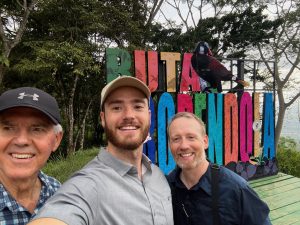
A path to ophthalmology
Moore’s interest in ophthalmology started with his father-in-law, Dr. Barry Welch, who practices in rural Cody, Wyoming. “Seeing the difference he makes for patients who would otherwise travel hours for eye care showed me what a rural ophthalmologist can mean to a community,” he said.
His interest in research began through UW’s Independent Investigative Inquiry (Triple I) program. There, he worked with Dr. Shu Feng, Associate Professor; Director, Medical Student Clerkship Program and fellow medical students on a study of virtual reality–based visual field screening in the emergency department at Harborview. “I was surprised by how useful a quick eye screening could be in such a busy ED, and that experience helped shape the research I do now.”The Honduras trip was also a return. A mission in Guatemala eight years ago gave Moore his Spanish and, in his words, “a deep affection for the people of Central America.
“This was the first time he went back, “this time with skills I could actually offer.”
Two weeks, more than 170 surgeries
The team worked in Jutiapa, near La Ceiba, and in El Progreso, alongside Drs. Michael Bradley, Kenneth Turley, Edgardo Cordova and Christian Rodriguez. In Jutiapa, Evelyn and José Castellar, who run Proyecto Honduras, manage the clinic and operating room space, and they housed and fed the entire team. In El Progreso, the team also worked with the Centro Cristiano de Servicios Humanitarios de Honduras (CCSHH).
Under attending supervision, Moore performed retrobulbar anesthetic blocks and helped teach the technique to local staff and technicians. He circulated in the operating room, measured eye pressures, and used ultrasound and fundus photography during workups. After surgery, he taught patients about postoperative care and their medications, handed out pressure-lowering eye drops with instructions, and helped coordinate referrals for patients who returned with complications.
Moore participated in more than 170 surgeries; the team performed even more over the two weeks. Many of the cataracts were very advanced, so nearly every case used manual small-incision cataract surgery (MSICS), a technique that delivers excellent results without the expensive equipment phacoemulsification requires. The team also cared for patients with glaucoma and pterygium.
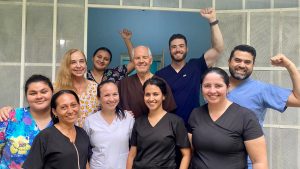
Watching these surgeons work efficiently, safely, and with genuine kindness at that volume taught me what high-quality care looks like when resources are limited,” he said.
The patient who still couldn’t see
Nearly every cataract was so advanced that the team couldn’t see the optic nerve before surgery. That meant there was no way to know whether a patient also had glaucoma, which can cause irreversible vision loss.
Moore remembers unpatching one patient who celebrated, then moving to the next expecting the same moment. Instead, she was sad because she still couldn’t see. Further examination showed advanced glaucoma. Surgery had removed her cataract, but the damage glaucoma had already done was permanent.
“That experience has stayed with me because it showed how much can be done for a patient while also reminding me of the limitations of what we can offer when disease goes undetected for too long,” he said.
Bringing Honduras back to the lab
“That patient is a big part of why my glaucoma research matters to me,” Moore said. “Cataract-related vision loss can often be reversed. Glaucoma vision loss can’t, and it often goes undetected until it’s too late.”
At the Moran Eye Center, under Dr. Brian Stagg, Moore is working on a study comparing multiple VR visual field devices against standard testing. He is also involved in a study evaluating newer tools for measuring eye pressure.
Honduras made him think seriously about whether portable screening could work in low-resource settings. Where a full ophthalmology clinic isn’t available, a headset could potentially help identify people who need further evaluation. He is continuing to explore how that screening might be adapted and validated for those settings. One of the ophthalmologists he worked with in Honduras has been thinking about setting up regional teleophthalmology screening sites, and Moore hopes that conversation leads somewhere.
Rural Wyoming and rural Central America
Moore hopes to practice in rural Wyoming with an academic affiliation, so he can care for patients, teach medical students, and keep doing research on how to reach people who are currently missed. “Honduras made that goal more concrete,” he said.
He has kept that work going at home. During his research year, he interprets in Spanish and helps with basic eye workups through the University of Utah’s outreach program on surgery, clinic and injection days. He also volunteers as an interpreter at the Maliheh Free Clinic in Salt Lake City.
“Rural Wyoming and rural Central America face some of the same challenges, particularly distance from specialty care, and I want my career to address those gaps in both places.”
The people behind the work
Some of the most meaningful parts of the trip, Moore said, were the relationships with local staff, who worked incredibly hard and selflessly. He grew especially close with Gabby, who hopes to go to medical school and become an ophthalmologist herself. He tried to offer advice where he could and hopes they stay in touch.
The team also visited beaches along the Caribbean coast and hiked while listening to howler monkeys and spotting toucans. “The trip reminded me that humanitarian work isn’t just about the procedures we perform or the number of patients we see,” he said. “It’s also about the relationships we build, the things we learn from one another, and the experiences that shape who we become as physicians.”
Moore credits his wife, Madelyn, who cares for their two young daughters at home, and both his parents and parents-in-law for supporting the family during his research year and trips like this one. “Pursuing these opportunities takes a team,” he said.
“I’m still very early in my medical career, and I have so much left to learn,” he added. “I’m trying to take advantage of every opportunity I can to gain experience, learn from physicians I admire, and let those experiences help shape the kind of ophthalmologist I hope to become.”
In early November, Moore will join Dr. Turley, Dr. Nathan Anderson and several more team members for an eight-day trip to Chihuahua, Mexico, with plans for another trip next year.