
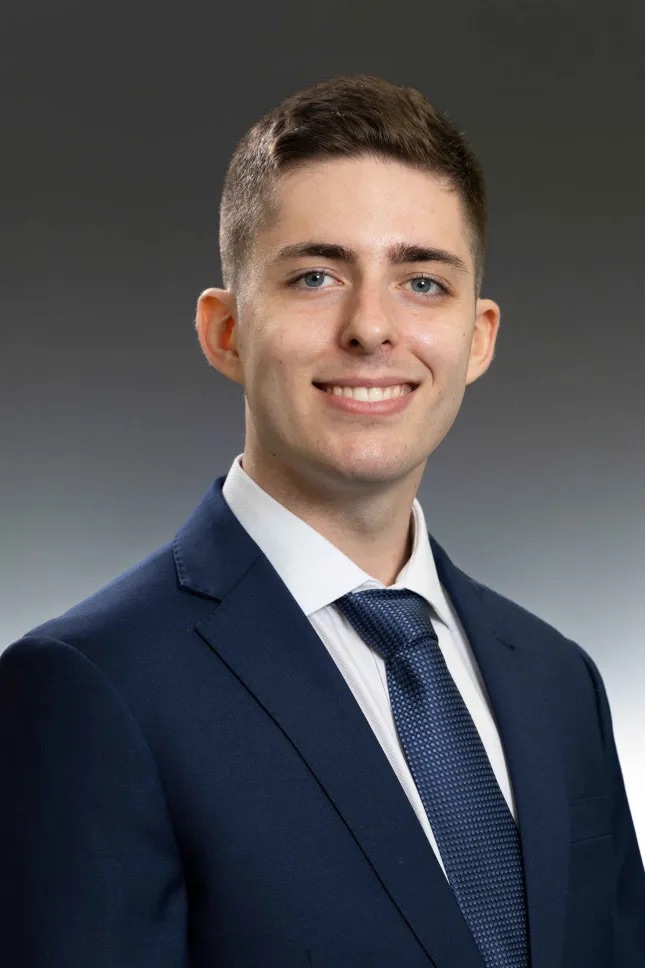
“My path to this research is a funny one: it was an accident.”
That’s how Alaska WWAMI first-year Joren Bowling describes landing at the center of an international research project examining the risks and challenges of delivering healthcare on the Moon. But the accident, as he tells it, was years in the making.
A long family tradition
Bowling grew up in Southern California on his father’s stories of life as a fighter pilot and his grandfather’s era of “steely-eyed missile men” — the same generation that walked on the Moon. When he moved to Fairbanks at 18 to study mechanical engineering at the University of Alaska Fairbanks, he hoped to follow them into the Air Force as a pilot.
Space was always nearby. In his second year at UAF, he discovered “a small but lively community of people interested in space research” and for a time dual-majored in mechanical engineering and mining engineering with an interest in space resources. He worked on research projects in that area before concluding — as he now acknowledges, erroneously — that cheap access to space was still decades out.
He set space aside and focused on what drew him to engineering in the first place: solving difficult problems to build a better future for his community.
Rural Alaska as preparation
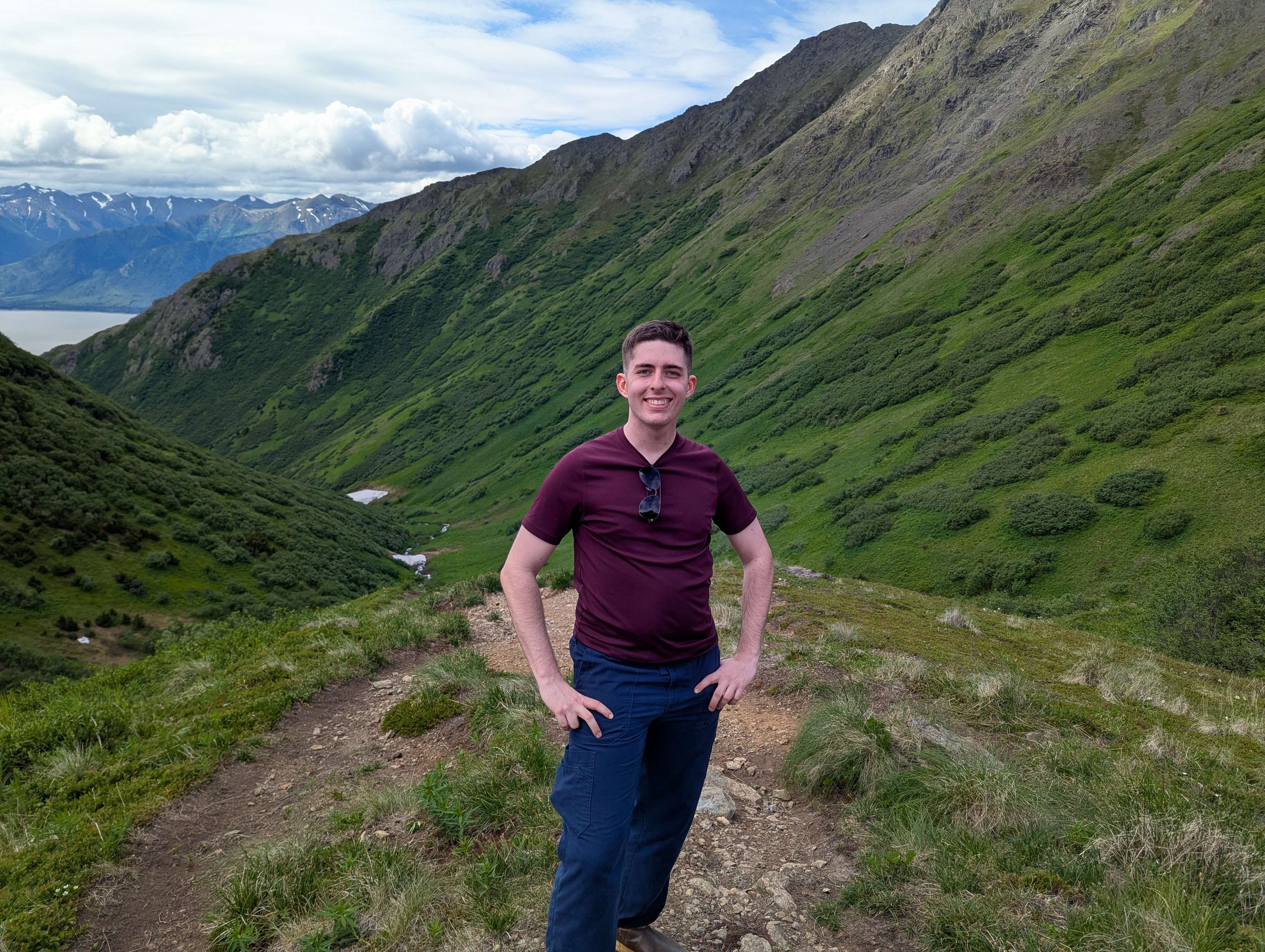 After graduating, Bowling worked as a water utility engineer for the Alaska Native Tribal Health Consortium, maintaining and upgrading water systems in fly-in villages across the state. The work was meaningful, but something was missing.
“I wanted more interpersonal aspects to my career,” he said.
That realization pointed him toward medicine. He’d already spent years preparing — working as an EMT in North Pole and as a medical scribe at Alaska Regional Hospital. When the time came, he applied to exactly one school: the University of Washington. He was admitted fourth off the waitlist into the E25 Anchorage class.
He’d made peace with the idea that space medicine was a goal for “well into my attendinghood.” Medicine was his path, he decided, “whether or not it involved space.”
The accident
Barely months into MS1 year, that changed.
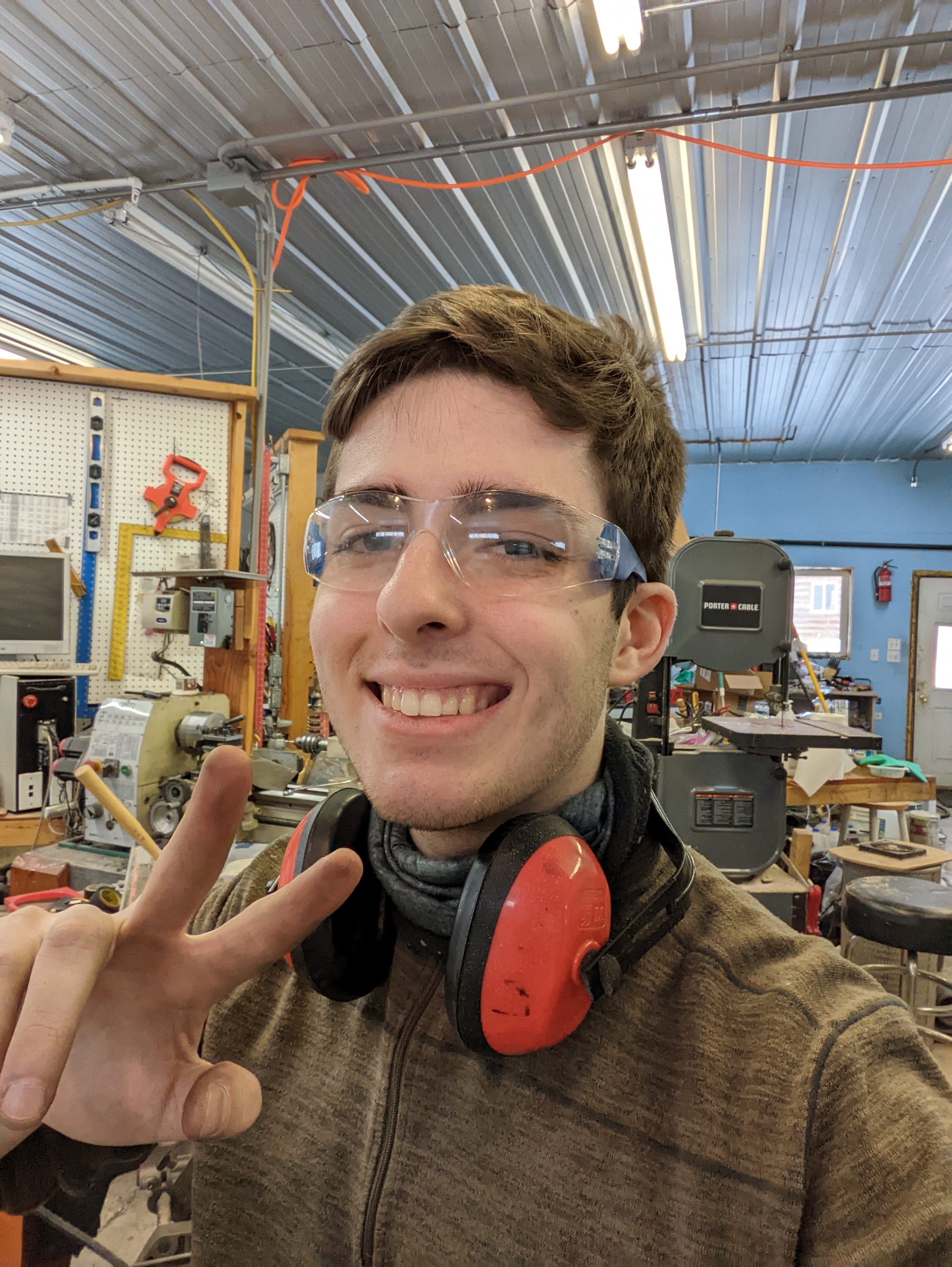
Each student in his cohort had a short social media profile posted by the class. Bowling mentioned offhandedly that he enjoyed 3D printing as a hobby. Fourth-year Alaska WWAMI student Landon Basner came across the post and reached out to ask if Bowling would be interested in doing some engineering work for a medical device project.
Bowling said yes. After finishing that project — which produced a 3D printed and hand-painted mock-up he describes as one he’s “very proud of” — he passed his resume to Basner to ask if Dr. Laligam Sekhar, a UW neurosurgeon, would sponsor him for the program’s required summer research project.
Dr. Sekhar, it turned out, had an idea on the backburner that matched Bowling’s background almost exactly: a study on healthcare on the Moon.
“Lo-and-behold,” Bowling said.
The research
 Bowling is now helping spearhead the project alongside Dr. Sekhar, Basner, and Dr. Varadaraya Shenoy, a UW research fellow. Together, they have assembled a team of around 30 experts from across the U.S., the UK, and — as Bowling notes with particular weight — a frontline hospital in the war in Ukraine.
The project examines the risks and challenges the Moon may pose to delivering healthcare, operating from a straightforward premise: within the next ten to twenty years, there will be a sufficiently large population living and working on the Moon that medical emergencies cannot always be handled by an emergency return to Earth.
“It’s a three-day trip from the surface of the Moon to Earth at best,” Bowling said.
That constraint forces a rethinking of medicine from the ground up. Resources are limited. Mass to the Moon is expensive. Evacuation is not always possible. And many of the assumptions underlying everyday medical practice simply don’t hold.
Bowling’s favorite example: CPR.
“How do you do CPR in space? On the Moon, a 200lb person ‘weighs’ thirty-ish pounds — there’s no way you can do chest compressions weighing only thirty pounds. Do you stand inverted on the ceiling and push ‘up’ against the patient? Do you strap yourself to the bed by the knees?”
His years in rural Alaska gave him an unexpected frame for these questions. Working in fly-in villages with scarce resources, difficult transport, and hostile winter conditions, he saw parallels that now inform the research directly.
“A medical emergency in a snowed-in fly-in village might as well be on the Moon,” he said. “I believe there is a great deal to learn about how we practice medicine here on Earth based on what we will learn in space.”
What he’s learned
The breadth of the team has been one of the most rewarding aspects of the project. Collaborators have brought expertise ranging from space-based pathology to how medicine is delivered on a modern drone-saturated battlefield — underground, Bowling notes, due to the conditions.
“It has been beyond an honor to work closely with so many physicians from around the world,” he said. “I cannot begin to detail what I’ve learned from this project.”
The team is now in the final stages before submitting the work for publication and conference presentations.
“For my first paper ever, I am exceptionally pleased with the outcome,” Bowling said. “I could have never done anything like this without their help, and without a heap of luck to have been picked up by them in the first place.”
What’s next
 As for his future specialty, Bowling is keeping his options open — emergency medicine and neurosurgery are both on his radar — but his answer to the question is characteristically direct.
“Whatever is most suited to helping build the space-medical industry necessary for long-term habitation.”
He credits the WWAMI program for creating the conditions that made the research possible, pointing to the volume of physicians who have been willing to engage with an unconventional project and the environment of support for students pursuing non-traditional paths.
“The sheer amount of opportunity that this school has to offer with respect to novel career trajectories is a major reason I sing the praise of UW,” he said. “Even during undergrad, I’ve always walked my own path in pursuit of things like space resources and space medicine, so finding an environment that is so supportive of this has been a dream come true.”
For students with big or unconventional interests, his advice is simple:
“Dream big; aspire to build things that most people would scoff at as impossible. You cannot build what you cannot dream.”